
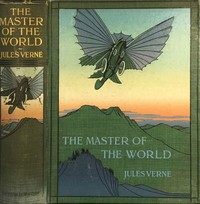
The Master of the World
Written by Jules Verne
Chaptra reads alongside you — AI insights, chapter breakdowns and reader discussions for every book. Join free
About this book
Reading guide
Themes, characters and key ideas in The Master of the World, written by Chaptra AI.
- about 7 hours
- intermediate
- mysterious
- adventurous
- suspenseful
Jules Verne's "The Master of the World" plunges Chief Inspector John Strock into a perplexing investigation of mysterious phenomena near the Great Eyrie in North Carolina, where strange noises and lights suggest either a volcanic threat or something far more sinister. His mission uncovers the existence of a brilliant, reclusive inventor named Robur, who commands an incredible multi-purpose vehicle, the *Terror*, capable of traversing land, sea, and air with unprecedented speed. Strock's pursuit leads to his capture and an involuntary journey aboard Robur's astonishing machine, revealing the inventor's grandiose vision for technological supremacy and his disdain for a world he deems unworthy. The novel explores the ethical dilemmas of unchecked scientific power, the limits of human curiosity, and the thin line between genius and madness as Strock confronts a man who believes himself above all laws.
“"There are no impossibilities, only impossibilities yet to be overcome."”
Key themes
- Technological Advancement vs. Ethics
- This theme explores the profound implications of scientific innovation, particularly when such power falls into the hands of an individual unfettered by moral or societal constraints. Robur's *Terror* represents the pinnacle of technology, but his use of it for personal glory and to intimidate the world raises critical questions about responsibility, control, and the potential for science to be weaponized or misused.
- Human Curiosity and Exploration
- The novel is propelled by Chief Inspector Strock's insatiable curiosity and his relentless drive to uncover the truth behind the mysterious phenomena. This theme highlights the human desire to explore the unknown, to understand what defies explanation, and to push the boundaries of knowledge, even in the face of danger. It contrasts with Robur's desire to keep his inventions secret while simultaneously demonstrating their power.
- Isolation and Power
- Robur's character embodies the theme of isolation as a source of immense, unchecked power. By withdrawing from society and operating beyond its laws, he gains the freedom to pursue his inventions without interference, but at the cost of moral accountability. This isolation allows him to develop a technology that gives him unparalleled power, but it also fosters his megalomania and detachment from humanity.
Worth discussing
To what extent does Robur represent the dangers of unchecked scientific ambition, and is his philosophy entirely without merit?
Chapter-by-chapter breakdowns, character arcs and the full thematic analysis come with a free account.
Discussions
No one has started one yet
Questions this book opens up
No discussions yet
Be the first to start a discussion about this book!
Sign up to start the discussionReviews
No reviews yet
Be the first to review this book!