
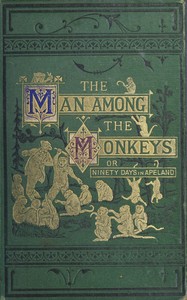
The man among the monkeys; or, Ninety days in apeland: To which are added: The philosopher and his monkeys, The professor and the crocodile, and other strange stories of men and animals
Written by Léon Gozlan
Chaptra reads alongside you — AI insights, chapter breakdowns and reader discussions for every book. Join free
About this book
Reading guide
Themes, characters and key ideas in The man among the monkeys; or, Ninety days in apeland: To which are added: The philosopher and his monkeys, The professor and the crocodile, and other strange stories of men and animals, written by Chaptra AI.
- about 8 hours
- intermediate
- humorous
- adventurous
- dark
Léon Gozlan's "The Man Among the Monkeys; or, Ninety Days in Apeland" is a fantastical 19th-century adventure chronicling the extraordinary misfortunes of Polydorus Marasquin. After a tragic series of events—including his father's death by a tiger and his mother's demise in a vengeful baboon's arson—Marasquin, a former exotic animal trader, finds himself shipwrecked on an island teeming with intelligent apes. His subsequent ninety-day ordeal forces him to confront themes of survival, the complex and often absurd nature of human-animal relationships, and the dark humor inherent in his escalating predicaments. The narrative blends natural history passion with a thrilling, satirical exploration of man's place in the wild, culminating in a unique commentary on civilization and instinct.
“It was not merely a baboon, you see, but a philosopher of revenge, whose intellect, sharpened by indignity, could conceive of fire as an instrument of justice.”
Key themes
- Human-Animal Relationship / Nature vs. Civilization
- This theme is central to the entire narrative, exploring the complex, often contentious, and blurring lines between humanity and the animal kingdom. Gozlan challenges the notion of human superiority by depicting animals with intelligence, vengeful motives, and even societal structures. Marasquin's journey forces him to confront his preconceived notions about 'beasts' and question the very foundations of his 'civilized' identity when placed in a wild, untamed environment.
- Survival and Adaptation
- Polydorus Marasquin's entire journey is a testament to the human will to survive against overwhelming odds. Stripped of his home, family, and societal comforts, he is thrust into a hostile environment where his intellect and resourcefulness are constantly tested. The theme explores the primal instincts that emerge when civilization's veneer is stripped away, and the psychological and physical toll of constant vigilance.
- Revenge and Consequence
- The narrative is powerfully driven by the theme of revenge, particularly the baboon's calculated act of retribution against Marasquin's family and property. This event sets in motion a chain of consequences that fundamentally alters the protagonist's life. The theme explores the destructive nature of vengeance, but also questions the source of such anger, implying that human actions (like caging animals) can provoke unexpected and severe reactions.
Worth discussing
How does Gozlan use dark humor to explore themes of tragedy and survival? Is it effective?
Chapter-by-chapter breakdowns, character arcs and the full thematic analysis come with a free account.
Discussions
No one has started one yet
Questions this book opens up
No discussions yet
Be the first to start a discussion about this book!
Sign up to start the discussionReviews
No reviews yet
Be the first to review this book!