
About this book
Reading guide
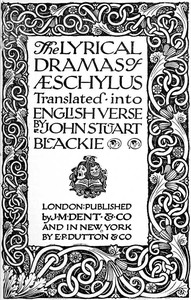
Themes, characters and key ideas in The Lyrical Dramas of Aeschylus Translated into English Verse, written by Chaptra AI.
- about 15 hours
- advanced
- tragic
- philosophical
- epic
John Stuart Blackie's "The Lyrical Dramas of Aeschylus Translated into English Verse" offers a vital 19th-century English interpretation of ancient Greek tragedy. This collection serves as a significant bridge, making the profound philosophical and emotional depth of Aeschylus's seminal plays accessible to a new audience. Blackie's work is characterized by its dedication to preserving the lyrical essence and dramatic power of the original Greek texts, a challenge he articulates in a thoughtful preface. The translation explores universal themes of fate, justice, divine will, and human suffering through compelling dramatic narratives, aiming to evoke the same powerful responses experienced by ancient audiences. It stands as a testament to the enduring relevance of classical literature and the translator's art.
Key themes
- Fate vs. Free Will
- Aeschylus's plays, as translated by Blackie, deeply explore the tension between predetermined destiny and individual choice. Characters often find themselves caught in inescapable cycles of ancestral curses or divine prophecies, yet they are still compelled to make moral decisions with profound consequences. This theme probes the limits of human agency in a world governed by powerful, often inscrutable, cosmic forces.
- Justice and Retribution
- A central concern in Aeschylus is the evolution of justice, from primitive blood-vengeance to the establishment of civic law and divine order. The plays often depict cycles of retribution, where one act of violence begets another, until a higher form of justice or divine intervention brings resolution. This theme examines the moral implications of revenge, the necessity of accountability, and the role of law in societal harmony.
- Divine Power and Human Suffering
- Aeschylus frequently portrays humanity as subject to the immense, often arbitrary or inscrutable, power of the gods. Characters endure immense suffering, not always as a direct result of their own hubris, but sometimes due to divine decrees or conflicts among the deities. This theme explores the vulnerability of mortals, the nature of piety, and the search for meaning in a world where divine will can be both benevolent and terrifying.
Worth discussing
Discuss Blackie's philosophy of translation as outlined in his preface. How successful do you think he was in achieving his stated goals of maintaining 'lyrical essence' and 'emotional responses'?
Chapter-by-chapter breakdowns, character arcs and the full thematic analysis come with a free account.
Discussions
No one has started one yet
Questions this book opens up
No discussions yet
Be the first to start a discussion about this book!
Sign up to start the discussionReviews
No reviews yet
Be the first to review this book!