
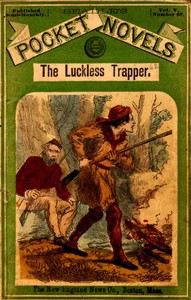
The luckless trapper; or, The haunted hunter
Written by William R. (William Reynolds) Eyster
Chaptra reads alongside you — AI insights, chapter breakdowns and reader discussions for every book. Join free
About this book
Reading guide
Themes, characters and key ideas in The luckless trapper; or, The haunted hunter, written by Chaptra AI.
- about 8 hours
- intermediate
- dark
- mysterious
- suspenseful
William R. Eyster's "The Luckless Trapper; or, The Haunted Hunter" is a late 19th-century wilderness novel that plunges protagonist Harry Winkle into a treacherous frontier fraught with danger and the supernatural. Driven by a quest for vengeance, Winkle navigates a landscape teeming with rival trappers and Native Americans, his journey beginning with ominous signs like a warning from Dick Martin and the discovery of a dead body. As Winkle pursues his personal vendetta, he confronts not only external threats but also the psychological toll of the wilderness and the unsettling presence of unseen forces. The narrative explores themes of survival, justice, and the moral complexities inherent in a world where primal instincts and ancient mysteries collide.
“The wilderness demands its due, blood for blood, if one dares to cross its silent, watchful gaze.”
Key themes
- Survival in the Wilderness
- This theme explores the raw, often brutal, struggle for existence in an untamed natural environment. It delves into the physical and mental fortitude required to navigate harsh conditions, procure food, evade danger, and endure isolation. The wilderness itself acts as a formidable adversary, testing the limits of human endurance and resourcefulness.
- Vengeance and Justice
- The novel deeply examines the psychological and moral complexities of vengeance. Winkle's personal grievance drives his entire journey, raising questions about the blurred lines between seeking justice and succumbing to a destructive cycle of retribution. It explores whether personal revenge can ever truly bring peace or if it only perpetuates violence.
- The Supernatural and the Unseen
- This theme introduces elements of mystery and the uncanny, suggesting that the wilderness holds secrets beyond human comprehension. The 'haunted hunter' aspect implies that Winkle might be pursued by literal spirits, or that the psychological pressures of isolation and guilt manifest as spectral visions and an overwhelming sense of dread. It explores the primal fear of the unknown and the spiritual dimension of the untamed land.
Worth discussing
How does the wilderness function as both a setting and a character in the novel?
Chapter-by-chapter breakdowns, character arcs and the full thematic analysis come with a free account.
Discussions
No one has started one yet
Questions this book opens up
No discussions yet
Be the first to start a discussion about this book!
Sign up to start the discussionReviews
No reviews yet
Be the first to review this book!