
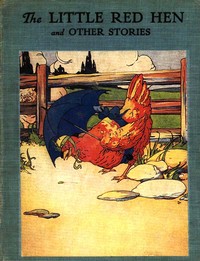
About this book
Read it with a club
Small groups reading the same books and talking as they go.


News
- 4 members
- 1,813 discussions
- Active Sep 11
Read The Little Red Hen: An Old English Folk Tale alongside people who are reading it too.
Also here: News Bulletin, Just Joking....
Chaptra Prime — paid clubs, every club feature, and unlimited reading support, for $5 a month or $60 once.
See PrimeReading guide
Themes, characters and key ideas in The Little Red Hen: An Old English Folk Tale, written by Chaptra AI.
- about 8 hours
- beginner
- moralistic
- instructional
- simple
"The Little Red Hen" is an enduring English folk tale that champions the virtues of hard work, self-reliance, and the just reward for one's efforts. The story follows a diligent Little Red Hen who, upon finding a grain of wheat, repeatedly asks her lazy housemates (a Duck, a Cat, and a Pig) for help with various tasks necessary to turn the grain into bread. Each time, they refuse, uttering the dismissive phrase, "Not I!" Undeterred, the Hen completes every step herself, from planting and harvesting to milling and baking. When the delicious bread is finally ready, the now-eager animals volunteer to help eat it, but the Hen, having done all the work, justly declares that she will eat it herself, teaching a clear lesson about the consequences of idleness and the fairness of earned reward.
“"Who will help me plant this wheat?"”
Key themes
- Work Ethic and Reward
- This is the central theme, emphasizing that effort and labor are prerequisites for earning a reward. The story explicitly links the Hen's diligent work at every stage to her exclusive right to enjoy the final product, while the idle animals receive nothing.
- Responsibility and Consequences
- The story clearly illustrates that choices have consequences. The Little Red Hen's responsible actions lead to a positive outcome (delicious bread), while the other animals' irresponsible idleness leads to a negative consequence (no bread).
- Self-Reliance vs. Community Contribution
- The tale explores the tension between individual effort and community support. While the Little Red Hen ultimately demonstrates self-reliance, the initial premise highlights the potential for collective effort. The story subtly suggests that a community thrives when its members contribute, but also that an individual can succeed independently when others fail to cooperate.
Worth discussing
Is it fair that the Little Red Hen ate the bread all by herself? Why or why not?
Chapter-by-chapter breakdowns, character arcs and the full thematic analysis come with a free account.
Discussions
No one has started one yet
Questions this book opens up
No discussions yet
Be the first to start a discussion about this book!
Sign up to start the discussionReviews
No reviews yet
Be the first to review this book!