
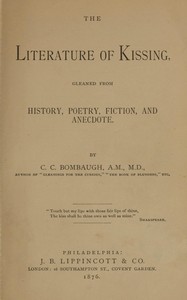
The literature of kissing : $b gleaned from history, poetry, fiction, and anecdote
Written by Charles C. (Charles Carroll) Bombaugh
Chaptra reads alongside you — AI insights, chapter breakdowns and reader discussions for every book. Join free
About this book
Reading guide
Themes, characters and key ideas in The literature of kissing : $b gleaned from history, poetry, fiction, and anecdote, written by Chaptra AI.
- about 8 hours
- intermediate
- erudite
- charming
- historical
Charles C. Bombaugh's "The Literature of Kissing" is a fascinating late 19th-century historical and literary treatise that meticulously explores the multifaceted significance of kissing across human history and culture. Drawing from a vast array of sources including biblical texts, classical literature, poetry, drama, and anecdotal accounts, the book compiles diverse representations of this universal gesture. Bombaugh delves into the varying roles of kisses in human relationships, from expressions of profound love and affection to social customs, acts of betrayal, and gestures of reverence. The work stands as a comprehensive compendium, illuminating how kissing has been understood, portrayed, and practiced throughout different eras and societies, emphasizing its enduring emotional weight and symbolic power.
“The kiss, in its myriad forms, is a universal language, transcending epochs and geographies, a testament to the enduring human need for connection.”
Key themes
- The Universality and Diversity of Human Affection
- This theme explores how the act of kissing, while seemingly universal, manifests in incredibly diverse ways across cultures and throughout history, reflecting a spectrum of human emotions from tender love to profound respect or even betrayal. Bombaugh meticulously documents this variety, showcasing how the core human need for connection finds expression in myriad forms of physical affection.
- The Symbolic Power of the Kiss
- This theme delves into how a simple physical act can be imbued with profound symbolic meaning, representing everything from love and fidelity to betrayal, reverence, and reconciliation. Bombaugh illustrates how literature and history have consistently used the kiss as a potent symbol to convey complex human states and relationships, far beyond its literal physical sensation.
- Social Ritual and Custom
- This theme examines the kiss not merely as an expression of emotion but as a structured component of social interaction, governed by customs, etiquette, and historical norms. Bombaugh explores how kissing serves as a ritualized greeting, a farewell, a sign of social status, or a formal component of ceremonies, highlighting its role in maintaining social order and expressing communal bonds.
Worth discussing
How does Bombaugh's selection of 'literature' define the scope of his study, and what might be missing from a modern perspective?
Chapter-by-chapter breakdowns, character arcs and the full thematic analysis come with a free account.
Discussions
No one has started one yet
Questions this book opens up
No discussions yet
Be the first to start a discussion about this book!
Sign up to start the discussionReviews
No reviews yet
Be the first to review this book!