
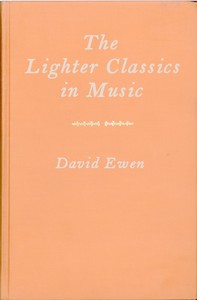
The Lighter Classics in Music: A Comprehensive Guide to Musical Masterworks in a Lighter Vein by 187 Composers
Written by David Ewen
Chaptra reads alongside you — AI insights, chapter breakdowns and reader discussions for every book. Join free
About this book
Reading guide
Themes, characters and key ideas in The Lighter Classics in Music: A Comprehensive Guide to Musical Masterworks in a Lighter Vein by 187 Composers, written by Chaptra AI.
- about 20 hours
- intermediate
- informative
- appreciative
- accessible
David Ewen's "The Lighter Classics in Music" serves as an expansive and accessible guide, meticulously cataloging and exploring notable musical compositions from 187 composers that are characterized by their lighter, more approachable themes. Published in the early 1960s, the book endeavors to demystify classical music, presenting a diverse repertoire that spans various genres and styles, from orchestral works to vocal pieces. It delves into the historical context and significance of these often-overlooked compositions, making a compelling case for their enduring popularity and crucial role in broadening classical music's appeal. By highlighting works like Joseph Achron's "Hebrew Melody" and Richard Addinsell's "Warsaw Concerto," Ewen provides a foundational resource for both seasoned aficionados and new enthusiasts seeking entry into the world of classical music.
“"Through these pages, we aim to demonstrate that classical music, in its lighter guises, offers profound enjoyment and accessibility to all."”
Key themes
- Accessibility of Classical Music
- This is the overarching theme of the book. Ewen endeavors to demonstrate that classical music is not solely for an elite or highly educated audience, but can be enjoyed by everyone. He achieves this by focusing on pieces characterized by immediate melodic appeal, clear structures, and often programmatic or narrative elements that make them easier to grasp without extensive musical training.
- The Value of 'Lighter' Compositions
- Ewen implicitly argues against the hierarchical distinction often made between 'serious' and 'light' classical music, asserting that the latter possesses significant artistic merit and cultural importance. He showcases how these compositions, though perhaps less complex, contribute profoundly to musical history and listener enjoyment, challenging the notion that only intellectually demanding works are truly valuable.
- Historical Context and Musical Evolution
- The book provides historical context for each composer and their works, illustrating how musical styles evolved and how specific compositions fit into their respective eras. By examining works from the early 1960s perspective, Ewen also offers a snapshot of music appreciation at that time, showing which 'lighter' pieces were then considered significant and why.
Worth discussing
How does David Ewen define 'lighter classics,' and do you agree with his criteria? Are there pieces you would add or remove from this category?
Chapter-by-chapter breakdowns, character arcs and the full thematic analysis come with a free account.
Discussions
No one has started one yet
Questions this book opens up
No discussions yet
Be the first to start a discussion about this book!
Sign up to start the discussionReviews
No reviews yet
Be the first to review this book!