
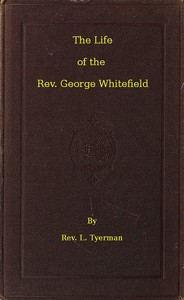
The Life of the Rev. George Whitefield, Volume 2 (of 2)
Written by L. (Luke) Tyerman
Chaptra reads alongside you — AI insights, chapter breakdowns and reader discussions for every book. Join free
About this book
Reading guide
Themes, characters and key ideas in The Life of the Rev. George Whitefield, Volume 2 (of 2), written by Chaptra AI.
- about 8 hours
- advanced
- historical
- devotional
- polemical
L. Tyerman's "The Life of the Rev. George Whitefield, Volume 2 (of 2)" meticulously chronicles the latter half of the influential evangelical preacher's career, focusing on his widespread impact across Britain and America during the 18th century. This volume particularly highlights Whitefield's second visit to Scotland in 1742, detailing the fervent religious revivals he ignited and the subsequent establishment of prayer societies, while also examining the significant opposition he encountered from various Presbyterian factions. Tyerman presents Whitefield as a tireless evangelist striving for Christian unity amidst theological disputes and personal challenges. The biography offers a comprehensive look at Whitefield's enduring legacy, showcasing his charismatic preaching and unwavering dedication to spiritual awakening, as interpreted through a late 19th-century lens.
“"The Spirit of God was powerfully present, and many were cut to the heart, crying out with a loud and bitter cry."”
Key themes
- Religious Revival and Evangelism
- This is the central theme, exploring the phenomenon of widespread spiritual awakening through Whitefield's powerful preaching. The book details the mechanisms of revival, from Whitefield's charismatic delivery to the emotional responses of his audiences, the subsequent establishment of prayer societies, and the testimonies of transformed lives. It highlights the social and personal impact of these movements.
- Theological Conflict and Denominationalism
- The biography extensively details the doctrinal disputes Whitefield engaged in, particularly with some Presbyterian factions and, at times, with John Wesley. These conflicts often centered on predestination, the nature of conversion, and the methods of evangelism. The theme illustrates the fragmented nature of Protestantism in the 18th century and the challenges of achieving Christian unity amidst diverse interpretations of scripture.
- Spiritual Leadership and Influence
- Tyerman explores Whitefield's profound impact as a spiritual leader, analyzing the sources of his authority and influence. This includes his exceptional oratorical skills, his unwavering conviction, and his ability to connect with people from all social strata. The theme also touches upon the burdens of leadership, such as constant travel, physical ailments, and the loneliness of facing widespread criticism.
Worth discussing
How does Tyerman portray Whitefield's leadership style, and what made it so effective in sparking revivals?
Chapter-by-chapter breakdowns, character arcs and the full thematic analysis come with a free account.
Discussions
No one has started one yet
Questions this book opens up
No discussions yet
Be the first to start a discussion about this book!
Sign up to start the discussionReviews
No reviews yet
Be the first to review this book!