
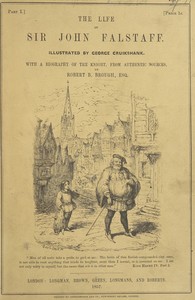
The Life of Sir John Falstaff
Written by Robert B. (Robert Barnabas) Brough
Chaptra reads alongside you — AI insights, chapter breakdowns and reader discussions for every book. Join free
About this book
Read it with a club
Small groups reading the same books and talking as they go.


News
- 1 member
- 1,813 discussions
- Active 2d ago
Read The Life of Sir John Falstaff alongside people who are reading it too.
Also here: News Bulletin, Just Joking....
Chaptra Prime — paid clubs, every club feature, and unlimited reading support, for $5 a month or $60 once.
See PrimeReading guide
Themes, characters and key ideas in The Life of Sir John Falstaff, written by Chaptra AI.
- about 10 hours
- intermediate
- humorous
- satirical
- witty
Robert B. Brough's "The Life of Sir John Falstaff" is a unique Victorian literary endeavor, offering a continuous biographical narrative for Shakespeare's iconic rogue. Brough meticulously stitches together Falstaff's scattered appearances across Shakespeare's plays, from his purported youth to his eventual death, while also inventing scenes and motivations to create a coherent life story. Illustrated famously by George Cruikshank, the book explores Falstaff's enduring wit, roguery, and complex charm through a Victorian lens, attempting to reconcile his various portrayals into a single, comprehensive character study. It stands as both a homage to Shakespeare and a significant work of Victorian literary pastiche, delving into themes of friendship, betrayal, and the nature of comedic characters.
“"There lived not a man in England who could so well combine the pleasures of philosophy with the practicalities of a full purse, however emptily acquired."”
Key themes
- The Nature of Roguery and Wit
- This theme is central to Falstaff's character. Brough explores how Falstaff uses his sharp wit and cunning to navigate a world that often defies him, making his roguery a form of intellectual survival. It questions the line between charming rascality and outright villainy, often finding humor and even a kind of wisdom in Falstaff's unconventional ethics.
- Friendship and Betrayal
- The complex relationship between Falstaff and Prince Hal is the emotional core of the book. Brough delves into the dynamics of their bond, the genuine affection mixed with Hal's growing awareness of his royal duties, and the ultimate, painful betrayal when Hal rejects Falstaff. It explores the sacrifices required by power and the cost of outgrowing old companions.
- Aging and Mortality
- Brough's narrative, by providing a full life arc, emphasizes Falstaff's journey from robust, if corpulent, vitality to an ailing, increasingly vulnerable old man. This theme explores the physical and emotional toll of age, the loss of youthful vigor, and the contemplation of one's legacy and inevitable end. It adds a layer of pathos to Falstaff's otherwise humorous existence.
Worth discussing
How does Brough's portrayal of Falstaff differ from or complement Shakespeare's original characterization? What are the implications of these differences?
Chapter-by-chapter breakdowns, character arcs and the full thematic analysis come with a free account.
Discussions
No one has started one yet
Questions this book opens up
No discussions yet
Be the first to start a discussion about this book!
Sign up to start the discussionReviews
No reviews yet
Be the first to review this book!