
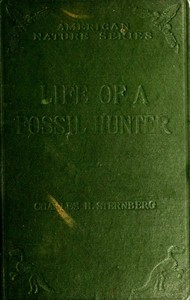
The Life of a Fossil Hunter
Written by Charles H. (Charles Hazelius) Sternberg
Chaptra reads alongside you — AI insights, chapter breakdowns and reader discussions for every book. Join free
About this book
Reading guide
Themes, characters and key ideas in The Life of a Fossil Hunter, written by Chaptra AI.
- about 8 hours
- intermediate
- Adventurous
- Inspirational
- Historical
Charles H. Sternberg's "The Life of a Fossil Hunter" is an early 20th-century memoir chronicling his lifelong dedication to paleontology across North America. The book meticulously details his adventures, challenges, and groundbreaking discoveries, particularly within the fossil-rich Cretaceous period. Sternberg’s narrative begins with his formative years, tracing his initial fascination with nature and fossils from his childhood in New York to his pivotal move to Kansas, where his career as a fossil hunter truly began. It serves as both a personal testament to the scientific pioneering spirit and an invaluable historical document of early paleontological exploration, highlighting the raw passion and arduous labor involved in uncovering ancient life.
“From my earliest recollections, the wonders of nature held an irresistible charm for me, a fascination that would shape the entire course of my life.”
Key themes
- Passion for Discovery
- This theme is central to the memoir, illustrating Sternberg's profound and lifelong dedication to paleontology. It explores the intrinsic human drive to uncover the unknown, to understand origins, and to connect with the deep past. Sternberg's narrative consistently emphasizes the joy, intellectual stimulation, and deep satisfaction derived from scientific exploration, making it a powerful testament to the pursuit of knowledge for its own sake.
- Humanity vs. Nature (and Adaptation)
- The memoir vividly portrays the challenging relationship between humans and the untamed wilderness of North America during the late 19th and early 20th centuries. Sternberg constantly battles harsh weather, rugged terrain, and isolation, highlighting the resilience and adaptability required to survive and thrive in such environments. It's not just a struggle against nature but also an adaptation to it, finding sustenance and shelter in unforgiving landscapes.
- The Pioneering Spirit and Legacy
- Sternberg's memoir embodies the pioneering spirit of early American science and exploration. It showcases the individual initiative, self-reliance, and sheer grit required to establish a new scientific field in challenging conditions. The book implicitly discusses the legacy of such pioneers, whose arduous work laid the groundwork for future generations of paleontologists and contributed significantly to the world's understanding of prehistoric life.
Worth discussing
How does Sternberg's memoir reflect the scientific methods and understanding of paleontology in the early 20th century compared to today?
Chapter-by-chapter breakdowns, character arcs and the full thematic analysis come with a free account.
Discussions
No one has started one yet
Questions this book opens up
No discussions yet
Be the first to start a discussion about this book!
Sign up to start the discussionReviews
No reviews yet
Be the first to review this book!