
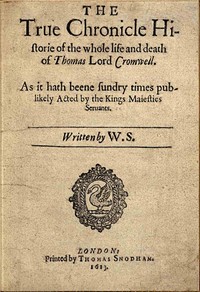
The Life and Death of Thomas Lord Cromwell
Written by Shakespeare (spurious and doubtful works)
Chaptra reads alongside you — AI insights, chapter breakdowns and reader discussions for every book. Join free
About this book
Reading guide
Themes, characters and key ideas in The Life and Death of Thomas Lord Cromwell, written by Chaptra AI.
- about 10 hours
- advanced
- tragic
- historical
- political
Shakespeare's (spurious) "The Life and Death of Thomas Lord Cromwell" is a historical tragedy chronicling the meteoric rise and precipitous fall of Thomas Cromwell, a central figure in King Henry VIII's court. The play follows Cromwell's journey from his humble origins as a blacksmith's son to a position of immense political power, showcasing his intelligence and ambition. However, his ascendancy inevitably breeds envy and opposition among powerful rivals, leading to a meticulously orchestrated downfall. Ultimately, despite his innocence, Cromwell is condemned for treason and executed, serving as a poignant exploration of the fickle nature of fortune, the perils of ambition, and the brutal realities of political life in Tudor England.
“From humble forge to royal council, fortune's wheel doth turn, alas, too swiftly.”
Key themes
- Ambition and its Consequences
- The play vividly explores the nature of ambition, portraying Cromwell's drive from humble beginnings as both a commendable trait and a dangerous flaw. His relentless pursuit of power and influence ultimately makes him a target, demonstrating how soaring ambition can lead to a tragic fall.
- The Volatility of Power and Fortune
- A central theme is the transient and unpredictable nature of power, particularly within a courtly setting. The play illustrates how quickly favor can turn to disfavor, and how even the most powerful individuals are subject to the whims of monarchs and the machinations of rivals. Cromwell's rise and fall serve as a stark reminder of the 'wheel of fortune'.
- Political Treachery and Betrayal
- The play is rife with examples of political intrigue, conspiracy, and betrayal. Cromwell's enemies, driven by envy and ideological opposition, orchestrate his downfall through deceit and false accusations, highlighting the ruthless and often morally bankrupt nature of court politics.
Worth discussing
To what extent is Cromwell's downfall a result of his ambition versus the machinations of his enemies?
Chapter-by-chapter breakdowns, character arcs and the full thematic analysis come with a free account.
Discussions
No one has started one yet
Questions this book opens up
No discussions yet
Be the first to start a discussion about this book!
Sign up to start the discussionReviews
No reviews yet
Be the first to review this book!