
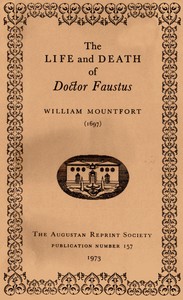
The Life and Death of Doctor Faustus Made into a Farce
Written by Christopher Marlowe,William Mountfort
Chaptra reads alongside you — AI insights, chapter breakdowns and reader discussions for every book. Join free
About this book
Reading guide
Themes, characters and key ideas in The Life and Death of Doctor Faustus Made into a Farce, written by Chaptra AI.
- about 8 hours
- intermediate
- Humorous
- Satirical
- Chaotic
William Mountfort's late 17th-century adaptation, "The Life and Death of Doctor Faustus Made into a Farce," ingeniously transforms Christopher Marlowe's tragic tale into a riotous comedic spectacle. This Restoration farce satirizes the original's profound themes of ambition and consequence, replacing dramatic gravitas with absurd scenarios and slapstick humor. Featuring commedia dell'arte figures like Harlequin and Scaramouche, the play reimagines Faustus's pact with the devil as a series of chaotic misadventures and comedic misunderstandings. It offers a lighthearted yet insightful commentary on human folly, showcasing a cultural shift in theatrical tastes from high tragedy to boisterous entertainment.
“"A paltry pact for such a potent power! Give me a feast, not a philosophy!"”
Key themes
- Transformation of Tragedy into Comedy
- This is the foundational theme and structural device of the play. It consciously takes a revered tragic narrative and reinterprets it through the lens of farce, demonstrating the versatility of storytelling and the power of genre to reshape meaning. It reflects a cultural shift where entertainment values prioritized laughter and spectacle over profound moral or philosophical instruction.
- Satire of Ambition and Knowledge
- The play takes the lofty ambitions and forbidden knowledge central to Marlowe's tragedy and reduces them to trivial, often ridiculous pursuits. It satirizes the very idea of seeking ultimate power or understanding when human nature inevitably uses such gifts for petty pranks and self-serving silliness.
- The Absurdity of Human Folly
- This theme highlights the inherent foolishness and irrationality of human behavior, especially when confronted with extraordinary power or opportunity. Faustus's inability to use his demonic powers for anything truly significant or even effectively demonstrates the comedic potential of human blundering.
Worth discussing
How does Mountfort's farce fundamentally alter the themes and message of Marlowe's original tragedy?
Chapter-by-chapter breakdowns, character arcs and the full thematic analysis come with a free account.
Discussions
No one has started one yet
Questions this book opens up
No discussions yet
Be the first to start a discussion about this book!
Sign up to start the discussionReviews
No reviews yet
Be the first to review this book!