
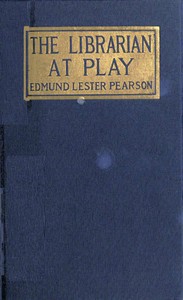
The librarian at play
Written by Edmund Lester Pearson
Chaptra reads alongside you — AI insights, chapter breakdowns and reader discussions for every book. Join free
About this book
Reading guide
Themes, characters and key ideas in The librarian at play, written by Chaptra AI.
- about 6 hours
- intermediate
- humorous
- lighthearted
- witty
Edmund Lester Pearson's "The Librarian at Play" is a delightful collection of humorous essays from the early 20th century, offering a witty glimpse into the daily life and eccentricities of librarians and library patrons. Through a blend of fictional scenarios, such as the whimsical 'interest gauge' designed to measure reader engagement, and relatable anecdotes, Pearson playfully explores the challenges, absurdities, and human element inherent in library work. The book introduces memorable characters like Professor Frugles and Mrs. Crumpet, whose interactions with the librarian narrator provide comic relief and highlight the diverse personalities encountered in literary settings. Ultimately, it serves as a lighthearted celebration of books, reading, and the often-unseen humor behind the quiet facade of the library.
“"One must approach the 'interest gauge' not as a scientific instrument, but as a mirror reflecting the glorious absurdities of human taste."”
Key themes
- The Humor of Library Life
- This is the central and most pervasive theme, exploring the inherent comedy in the daily operations of a library, from quirky patron interactions to the bureaucratic challenges and the librarian's own wry observations. Pearson finds humor in the juxtaposition of serious intellectual pursuits and very human foibles.
- Reader Engagement and Literary Taste
- The book delves into the subjective nature of what makes a book 'interesting' or 'valuable.' Through the 'interest gauge' and various character interactions, Pearson highlights the diversity of reader preferences, the sometimes-arbitrary nature of literary judgment, and the profound, often personal, connection readers form with books.
- The Human Element in Bureaucracy
- Pearson subtly explores how human nature, with all its idiosyncrasies, interacts with and sometimes challenges the structured, orderly world of the library. Despite rules and systems, the individual personalities of both staff and patrons inevitably introduce elements of unpredictability and charm.
Worth discussing
How does Pearson use humor to explore the challenges and rewards of library work?
Chapter-by-chapter breakdowns, character arcs and the full thematic analysis come with a free account.
Discussions
No one has started one yet
Questions this book opens up
No discussions yet
Be the first to start a discussion about this book!
Sign up to start the discussionReviews
No reviews yet
Be the first to review this book!