
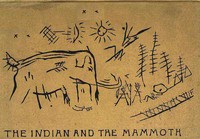
The Lenape Stone; or, The Indian and the Mammoth
Written by Henry C. Mercer
Chaptra reads alongside you — AI insights, chapter breakdowns and reader discussions for every book. Join free
About this book
Read it with a club
Chaptra's history and war clubs — small groups reading the same books and talking as they go.


Footnotes & Firefights
History and war
- 4 members
- 4 discussions
- Active Sep 11
Military history, from grand strategy down to the deeply boring logistics that actually decided everything. This is a Chaptra house club — set up and moderated by us to get the conversation going. Open to everyone; jump in anywhere.
Read The Lenape Stone; or, The Indian and the Mammoth alongside people who are reading it too.
Also here: Empire, Reconsidered
Chaptra Prime — paid clubs, every club feature, and unlimited reading support, for $5 a month or $60 once.
See PrimeReading guide
Themes, characters and key ideas in The Lenape Stone; or, The Indian and the Mammoth, written by Chaptra AI.
- about 8 hours
- advanced
- scholarly
- controversial
- historical
Henry C. Mercer's "The Lenape Stone; or, The Indian and the Mammoth" is a late 19th-century archaeological treatise examining a controversial artifact discovered in Pennsylvania. The book meticulously details the Lenape Stone, a carved slate fragment depicting a battle between Native Americans and a mammoth, and recounts its discovery by farmer Barnard Hansell. Mercer's work primarily serves as an impassioned argument for the stone's authenticity and its profound implications for understanding prehistoric human-mammoth coexistence in North America. It critically engages with the scientific debates and skepticism surrounding the artifact, positioning itself as a key document in early American archaeology and the interpretation of indigenous history.
“"The Lenape Stone, if genuine, forces a re-evaluation of our understanding of prehistoric man in America."”
Key themes
- Authenticity and Scientific Verification
- The central theme revolves around the rigorous process of determining whether an artifact is genuine or a forgery. Mercer meticulously details the criteria and arguments used to establish or refute authenticity in archaeology, particularly when a discovery challenges established paradigms. This theme explores the nature of evidence, the weight of proof, and the scientific community's responsibility to both embrace new findings and resist unfounded claims.
- Human-Mammoth Coexistence
- The most significant implication of the Lenape Stone, if authentic, is its purported evidence of Native Americans coexisting with and hunting mammoths in North America. This theme challenges the prevailing scientific understanding of prehistoric timelines and the capabilities of early indigenous populations, pushing for a re-evaluation of when and how humans interacted with extinct megafauna.
- Interpretation of Artifacts and Cultural Memory
- This theme explores how material culture (artifacts) serves as a window into the past and how those objects are interpreted through the lens of scientific inquiry and cultural understanding. It also touches upon the role of cultural memory, perhaps embedded in indigenous myths, in shaping the depictions found on the stone. Mercer grapples with the challenge of deciphering symbolic representations and their potential connection to oral histories.
Worth discussing
How does Mercer's work reflect the scientific methodologies and biases of late 19th-century archaeology?
Chapter-by-chapter breakdowns, character arcs and the full thematic analysis come with a free account.
Discussions
No one has started one yet
Questions this book opens up
No discussions yet
Be the first to start a discussion about this book!
Sign up to start the discussionReviews
No reviews yet
Be the first to review this book!