
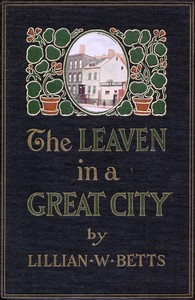
The leaven in a great city
Written by Lillian William Betts
Chaptra reads alongside you — AI insights, chapter breakdowns and reader discussions for every book. Join free
About this book
Reading guide
Themes, characters and key ideas in The leaven in a great city, written by Chaptra AI.
- about 8 hours
- intermediate
- somber
- observational
- informative
Lillian W. Betts's "The Leaven in a Great City" is a seminal early 20th-century social study meticulously documenting the dire conditions of poverty in New York City, particularly within its teeming tenement districts like the Fourth Ward. The work primarily focuses on the struggles faced by immigrant families living in overcrowded, unsanitary environments and simultaneously examines the various philanthropic and social experiments initiated to alleviate these pervasive challenges. Betts provides a vivid, often somber, portrayal of urban neglect and its impact on community dynamics and individual character, while also highlighting the remarkable resilience of the city's most vulnerable populations. It stands as a crucial historical record of social reform efforts and the complex interplay between societal structures, capitalist philanthropy, and human endurance in a rapidly industrializing metropolis.
“"The Fourth Ward, a veritable hive of humanity, where life, if it could be called living, was a constant struggle against the encroaching tide of squalor and despair." (Illustrative example)”
Key themes
- Urban Poverty and Tenement Life
- This is the central theme, exploring the brutal realities of living in overcrowded, unsanitary tenement housing in early 20th-century New York. Betts details the physical and psychological toll of poverty, including disease, lack of privacy, and the constant struggle for survival.
- Social Reform and Philanthropy
- The book meticulously examines the various efforts by philanthropic capitalists and social workers to improve the conditions of the poor. It delves into the motivations behind these reforms, their practical implementation, and their effectiveness, showcasing both successes and limitations.
- Resilience and Human Dignity
- Despite the grim conditions, Betts consistently highlights the enduring spirit, resourcefulness, and dignity of the tenement residents. The book showcases how individuals and families found ways to cope, maintain cultural identity, and support each other amidst immense hardship.
Worth discussing
How does Betts's depiction of poverty in early 20th-century New York compare to contemporary issues of urban inequality and housing crises?
Chapter-by-chapter breakdowns, character arcs and the full thematic analysis come with a free account.
Discussions
No one has started one yet
Questions this book opens up
No discussions yet
Be the first to start a discussion about this book!
Sign up to start the discussionReviews
No reviews yet
Be the first to review this book!