
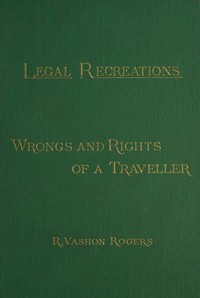
The law of the road; or, wrongs and rights of a traveller
Written by R. Vashon (Robert Vashon) Rogers
Chaptra reads alongside you — AI insights, chapter breakdowns and reader discussions for every book. Join free
About this book
Reading guide
Themes, characters and key ideas in The law of the road; or, wrongs and rights of a traveller, written by Chaptra AI.
- about 8 hours
- intermediate
- humorous
- informative
- witty
R. Vashon Rogers's "The Law of the Road; or, Wrongs and Rights of a Traveller" is a late 19th-century humorous legal guide designed to educate and entertain travelers about their rights and liabilities. Through the engaging narrative of Eldon, a protagonist facing a series of comedic legal predicaments caused by his reckless servant John, the book explores the intricacies of transport law, particularly concerning carriages and railroads. The text blends practical legal insights with amusing anecdotes and domestic humor, presented through lively conversations between Eldon and his wife, Elizabeth. It aims to demystify legal principles related to servant liability, pedestrian rights, and Sunday driving, making complex legal topics accessible and enjoyable for the general reader.
“"It seems, my dear Elizabeth, that my New Year's resolution to avoid legal entanglements has been utterly thwarted by John's peculiar genius for vehicular mayhem!"”
Key themes
- The Law and Everyday Life
- This theme explores how legal principles permeate even the most mundane aspects of daily existence, particularly for a traveler in the late 19th century. Rogers demonstrates that ignorance of the law is no excuse, and even simple actions like driving a carriage can have complex legal ramifications.
- Humor as a Pedagogical Tool
- The book masterfully uses wit, domestic humor, and amusing anecdotes to make potentially dry legal information engaging and memorable. This approach allows readers to absorb complex legal concepts without feeling overwhelmed.
- Master-Servant Relationships and Liability
- A significant portion of the legal discussion revolves around the liability of a master for the actions of his servant, particularly when those actions occur in the course of employment. This theme illuminates the legal and social dynamics of employer-employee relationships in the Victorian era.
Worth discussing
How does Rogers use humor to make complex legal topics accessible to a general audience?
Chapter-by-chapter breakdowns, character arcs and the full thematic analysis come with a free account.
Discussions
No one has started one yet
Questions this book opens up
No discussions yet
Be the first to start a discussion about this book!
Sign up to start the discussionReviews
No reviews yet
Be the first to review this book!