
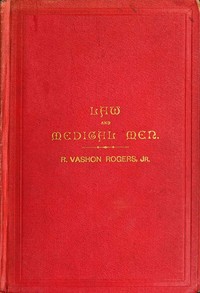
The Law and Medical Men
Written by R. Vashon (Robert Vashon) Rogers
Chaptra reads alongside you — AI insights, chapter breakdowns and reader discussions for every book. Join free
About this book
Read it with a club
Small groups reading the same books and talking as they go.


News
- 4 members
- 1,813 discussions
- Active Sep 11
Read The Law and Medical Men alongside people who are reading it too.
Also here: News Bulletin, Just Joking....
Chaptra Prime — paid clubs, every club feature, and unlimited reading support, for $5 a month or $60 once.
See PrimeReading guide
Themes, characters and key ideas in The Law and Medical Men, written by Chaptra AI.
- about 12 hours
- advanced
- informative
- scholarly
- analytical
R. Vashon Rogers' "The Law and Medical Men" is a late 19th-century legal treatise meticulously designed to illuminate the complex interplay between the legal and medical professions. It serves as a vital bridge in legal literature, offering practitioners insights into historical precedents, ethical dilemmas, and practical legal considerations pertinent to medical practice. The work systematically traces the evolution of medical authority from ancient Druids to modern practitioners, addressing critical topics such as malpractice, professional compensation, and the ethical responsibilities inherent in the medical field. Through this historical and analytical lens, Rogers establishes a foundational understanding of medical law's development and the enduring challenges at the intersection of these two crucial societal pillars.
“"The historical trajectory of medical practice reveals a constant negotiation between societal expectation and legal codification, a process essential for the establishment of professional trust."”
Key themes
- The Intersection of Law and Medicine
- This is the core theme of the treatise, exploring the myriad ways legal principles and medical practice intertwine. Rogers aims to clarify how legal statutes, precedents, and ethical considerations govern medical professionals' actions, responsibilities, and liabilities.
- The Evolution of Medical Practice and Authority
- Rogers meticulously traces the historical development of medical practice from ancient, spiritual healers to the specialized, scientific practitioners of the late 19th century. This theme highlights how societal perceptions, scientific advancements, and legal frameworks have continuously reshaped the role and authority of medical professionals.
- Professional Ethics and Responsibility
- Rogers delves into the moral and professional obligations inherent in medical practice. This theme covers the standards of conduct expected from medical men, their duty of care towards patients, and the ethical implications of their decisions and actions.
Worth discussing
How does Rogers' historical overview of medical practice (e.g., Druids, barber-surgeons) inform his arguments about late 19th-century medical law?
Chapter-by-chapter breakdowns, character arcs and the full thematic analysis come with a free account.
Discussions
No one has started one yet
Questions this book opens up
No discussions yet
Be the first to start a discussion about this book!
Sign up to start the discussionReviews
No reviews yet
Be the first to review this book!