
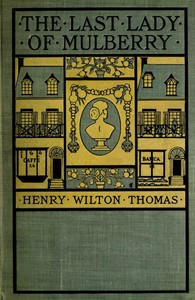
The Last Lady of Mulberry: A Story of Italian New York
Written by Henry Wilton Thomas
Chaptra reads alongside you — AI insights, chapter breakdowns and reader discussions for every book. Join free
About this book
Read it with a club
Small groups reading the same books and talking as they go.


News
- 4 members
- 1,813 discussions
- Active Sep 11
Read The Last Lady of Mulberry: A Story of Italian New York alongside people who are reading it too.
Also here: News Bulletin, Just Joking....
Chaptra Prime — paid clubs, every club feature, and unlimited reading support, for $5 a month or $60 once.
See PrimeReading guide
Themes, characters and key ideas in The Last Lady of Mulberry: A Story of Italian New York, written by Chaptra AI.
- about 12 hours
- intermediate
- nostalgic
- poignant
- historical
"The Last Lady of Mulberry" by Henry Wilton Thomas is a poignant historical novel that chronicles the life of an Italian-American matriarch, Isabella Rossi, as she navigates the dramatic shifts in New York's iconic Little Italy from the early 20th century through its gradual decline. The narrative beautifully interweaves personal struggles with the broader socio-economic changes impacting immigrant communities, focusing on themes of tradition, family, and the relentless march of progress. It's a deeply atmospheric story, rich with cultural detail and a nostalgic look at a bygone era, seen through the eyes of a woman who embodies the spirit of Mulberry Street.
“"Mulberry Street was not just a place; it was a heartbeat, a symphony of a thousand stories humming in unison."”
Key themes
- Tradition vs. Modernity
- This central theme explores the constant tension between holding onto ancestral customs, values, and ways of life, and the inevitable pressures of adapting to a rapidly changing modern world. Isabella embodies tradition, while her children represent the pull towards modernity and assimilation, leading to intergenerational conflict and a profound sense of loss.
- The Immigrant Experience
- The novel deeply examines the multifaceted journey of immigrants – from the initial hardship and hope of leaving one's homeland, to the challenges of establishing a new life, facing prejudice, building community, and the complex process of assimilation across generations. It highlights the resilience, sacrifices, and enduring spirit required to forge a new identity while honoring one's roots.
- Family and Community
- The enduring strength and sometimes stifling nature of family bonds and the vital role of community form a bedrock of the narrative. The novel explores how family provides support, identity, and a sense of belonging, but also how it can impose expectations and traditions that clash with individual desires. The community of Little Italy acts as an extended family, offering solidarity and shared cultural identity.
Worth discussing
How does Isabella embody the 'last lady' of Mulberry Street? What does her character symbolize for the Italian-American community?
Chapter-by-chapter breakdowns, character arcs and the full thematic analysis come with a free account.
Discussions
No one has started one yet
Questions this book opens up
No discussions yet
Be the first to start a discussion about this book!
Sign up to start the discussionReviews
No reviews yet
Be the first to review this book!