
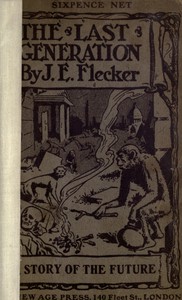
The Last Generation: A Story of the Future
Written by James Elroy Flecker
Chaptra reads alongside you — AI insights, chapter breakdowns and reader discussions for every book. Join free
About this book
Reading guide
Themes, characters and key ideas in The Last Generation: A Story of the Future, written by Chaptra AI.
- about 8 hours
- intermediate
- dystopian
- grim
- melancholic
James Elroy Flecker's "The Last Generation: A Story of the Future" is an early 20th-century dystopian novel that grimly foretells humanity's self-inflicted demise. Through the eyes of a protagonist transported by a temporal wind, readers witness a future ravaged by societal decay, where civilization's misguided choices lead to a horrifying conclusion. The narrative unfolds scenes of state-mandated sterilization and the morbid establishment of mutual extermination clubs, painting a bleak picture of human despair. Amidst this collapse, the enduring beauty of art and nature serves as a poignant contrast to the grim reality of the last generation, who await their end in quiet desperation. The book stands as a stark cautionary tale, urging reflection on the perilous trajectory of society and the ultimate consequences of human ambition.
“"A temporal wind, unseen and unbidden, swept me from the familiar shores of my own time into the desolate future of mankind."”
Key themes
- Societal Decay and Collapse
- This is the central theme, exploring how a once-flourishing civilization can unravel due to its own misguided ambitions and choices. The novel depicts a gradual but inevitable decline, marked by a loss of purpose, moral decay, and the ultimate breakdown of social structures, leading to self-destruction.
- Human Extinction and Nihilism
- The novel directly confronts the ultimate end of humanity, exploring the profound despair and nihilism that can arise when a species loses its will to survive. It questions the inherent value of existence when faced with an inevitable, self-imposed demise, and the psychological impact of living as the 'last generation.'
- Consequences of Unchecked Ambition/Progress
- The novel acts as a cautionary tale, directly linking the 'misguided ambitions' and 'choices' of civilization to its ultimate downfall. It critiques the idea of progress without ethical boundaries, suggesting that humanity's drive to advance can lead to its own undoing if not tempered by wisdom and foresight.
Worth discussing
How does Flecker's depiction of societal collapse resonate with contemporary anxieties about the future of humanity and the planet?
Chapter-by-chapter breakdowns, character arcs and the full thematic analysis come with a free account.
Discussions
No one has started one yet
Questions this book opens up
No discussions yet
Be the first to start a discussion about this book!
Sign up to start the discussionReviews
No reviews yet
Be the first to review this book!