
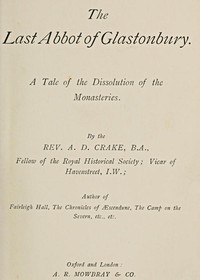
The Last Abbot of Glastonbury: A Tale of the Dissolution of the Monasteries
Written by A. D. (Augustine David) Crake
Chaptra reads alongside you — AI insights, chapter breakdowns and reader discussions for every book. Join free
About this book
Reading guide
Themes, characters and key ideas in The Last Abbot of Glastonbury: A Tale of the Dissolution of the Monasteries, written by Chaptra AI.
- about 8 hours
- intermediate
- ominous
- tragic
- solemn
A. D. Crake's "The Last Abbot of Glastonbury" is a poignant late 19th-century historical novel chronicling the tragic final years of Glastonbury Abbey and its revered Abbot, Richard Whiting, during Henry VIII's Dissolution of the Monasteries. The narrative skillfully interweaves the historical account of Whiting's steadfast faith and ultimate martyrdom with the fictional journey of Cuthbert, an orphaned boy whose life becomes entangled with the abbey's fate. Set against a backdrop of chilling political intrigue and religious persecution, the story explores themes of loyalty, sacrifice, and the clash between spiritual devotion and state power. It paints a vivid, often somber, picture of a pivotal era, highlighting the profound societal and personal costs of the English Reformation.
“"The ancient stones held the echoes of centuries of prayer, a sanctuary against a world gone mad."”
Key themes
- Faith vs. State Power
- This is the central conflict of the novel, exploring the clash between unwavering religious conviction and the absolute authority of the monarch. Abbot Whiting's refusal to acknowledge Henry VIII's supremacy over the Church, and his defense of Glastonbury Abbey, directly pits spiritual loyalty against political command, leading to his martyrdom. The novel examines the profound ethical and personal dilemmas when one's deepest beliefs contradict state law.
- Martyrdom and Sacrifice
- The novel deeply explores the concept of martyrdom through Abbot Whiting, who chooses death over betraying his vows and faith. His sacrifice is presented as a noble act of spiritual courage, illustrating the ultimate cost of conviction. It highlights the idea that true victory can sometimes be found in principled defeat and self-sacrifice for a greater cause.
- The End of an Era / Societal Transformation
- The narrative vividly portrays the dissolution of the monasteries as a cataclysmic event marking the end of a centuries-old social, spiritual, and economic order in England. Crake emphasizes the profound loss of the monastic system's contributions to education, charity, and local governance, lamenting the destruction of a way of life and the subsequent societal upheaval. It's a reflection on how rapidly and violently societies can be reshaped.
Worth discussing
How does Crake use the dual narrative of Abbot Whiting and Cuthbert to explore the impact of the Dissolution of the Monasteries on different levels of society?
Chapter-by-chapter breakdowns, character arcs and the full thematic analysis come with a free account.
Discussions
No one has started one yet
Questions this book opens up
No discussions yet
Be the first to start a discussion about this book!
Sign up to start the discussionReviews
No reviews yet
Be the first to review this book!