
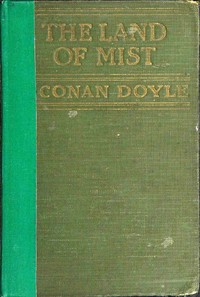
The land of mist
Written by Arthur Conan Doyle
Chaptra reads alongside you — AI insights, chapter breakdowns and reader discussions for every book. Join free
About this book
Reading guide
Themes, characters and key ideas in The land of mist, written by Chaptra AI.
- about 8 hours
- intermediate
- mysterious
- philosophical
- somber
Arthur Conan Doyle's "The Land of Mist" sees the formidable Professor Challenger, renowned for his scientific skepticism, grappling with profound personal grief after the death of his wife. This tragedy propels him, along with his daughter Enid and journalist Edward Malone, into an exploration of spiritualism, a movement Doyle himself championed. The novel charts Challenger's journey from staunch disbelief to a cautious, then fervent, acceptance of the supernatural, driven by a desperate hope for communication with the afterlife. Through a series of séances and encounters with various mediums, the characters confront the boundaries of science, belief, and the human desire for meaning beyond mortality, ultimately presenting a narrative that advocates for the validity of spiritualistic phenomena.
“"The world is not so simple as our science would make it out to be."”
Key themes
- Science vs. Spirituality/Belief
- This is the core conflict of the novel, explored through Professor Challenger's struggle to reconcile his empirical scientific worldview with the seemingly undeniable evidence of spiritual phenomena. The book argues that true science should be open to investigating all phenomena, even those that challenge established paradigms, and ultimately suggests that spiritualism is a higher form of science.
- Grief and Consolation
- Professor Challenger's deep mourning for his deceased wife is the primary catalyst for his spiritual journey. The novel explores how personal tragedy can shatter established beliefs and drive individuals to seek comfort and meaning in unconventional places. Spiritualism is presented as a profound source of consolation for those grappling with loss.
- The Nature of Reality and Perception
- The novel constantly questions what constitutes 'reality' and how our perceptions, biases, and existing beliefs shape our understanding of the world. It challenges the idea that only what is physically observable is real, suggesting that there are dimensions and phenomena beyond our normal sensory and scientific grasp. It explores the unreliability of both skepticism and blind faith.
Worth discussing
How does Challenger's personal tragedy influence his journey into spiritualism, and would his transformation have been believable without it?
Chapter-by-chapter breakdowns, character arcs and the full thematic analysis come with a free account.
Discussions
No one has started one yet
Questions this book opens up
No discussions yet
Be the first to start a discussion about this book!
Sign up to start the discussionReviews
No reviews yet
Be the first to review this book!