
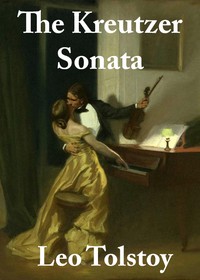
The Kreutzer Sonata and Other Stories
Written by Leo Tolstoy
Chaptra reads alongside you — AI insights, chapter breakdowns and reader discussions for every book. Join free
About this book
Read it with a club
Chaptra's fiction clubs — small groups reading the same books and talking as they go.


CraxMe Readers Book Club
Fiction
- 385 members
- 227 discussions
- Started December 2025
Welcome to the Readers Book Club. This is an informal group for like-minded people, where you can discuss books, share and recommend, track your reading progress, and lots more. Discuss Books — all about books. Discuss a particular book or genre, share your favourite quotes. Book Reviews — loved a book and highly recommend it? Or was it just average? Share your review and discuss with fellow readers. (May contain spoilers.) Group Reads — what is a book club without a group read! Buddy Reads — planning to read a book and looking for someone to read it with? Post in the Buddy Read request thread, find a reading buddy, and start discussing.
Read The Kreutzer Sonata and Other Stories alongside people who are reading it too.
Also here: Doorstops, First Lines Club
Chaptra Prime — paid clubs, every club feature, and unlimited reading support, for $5 a month or $60 once.
See PrimeReading guide
Themes, characters and key ideas in The Kreutzer Sonata and Other Stories, written by Chaptra AI.
- about 8 hours
- advanced
- dark
- intense
- philosophical
Leo Tolstoy's "The Kreutzer Sonata and Other Stories" is a collection deeply rooted in philosophical and moral inquiry, with the titular novella serving as its most prominent and controversial piece. It delves into the destructive nature of love, marriage, and jealousy through the first-person confession of Posdnicheff, a man who murdered his wife. The narrative critiques societal conventions surrounding marriage, sexuality, and gender roles, presenting a stark and often disturbing view of human relationships. Tolstoy uses the story to explore the perils of carnal desire, the hypocrisy of social norms, and the profound existential despair that can arise from disillusionment within matrimony. The collection as a whole reflects Tolstoy's later ascetic and moralistic period, challenging readers to confront uncomfortable truths about passion, morality, and the human condition.
“"The love that is born of the flesh is a lie, a deception, a mirage."”
Key themes
- Marriage as a Social Construct and Trap
- Tolstoy, through Posdnicheff, launches a scathing critique of marriage, particularly when it's founded on physical attraction rather than spiritual communion. He argues it's a hypocritical institution that often leads to disillusionment, conflict, and even violence, describing it as a form of 'legalized prostitution' that corrupts individuals.
- The Destructive Power of Lust and Jealousy
- The story profoundly illustrates how unchecked sexual desire and pathological jealousy can corrupt the individual soul and lead to tragic, violent outcomes. Posdnicheff's spiraling paranoia and possessiveness are meticulously detailed, showing how 'love' can transform into a destructive, all-consuming obsession.
- Hypocrisy and Societal Morality
- Tolstoy exposes what he perceived as the profound hypocrisy of 19th-century society regarding sexual morality, gender roles, and the facade of respectable marriage. He argues that outward appearances of propriety often conceal a cesspool of unacknowledged lust, resentment, and moral decay.
Worth discussing
To what extent does Posdnicheff's narrative serve as a critique of marriage, and to what extent is it a reflection of his own pathology?
Chapter-by-chapter breakdowns, character arcs and the full thematic analysis come with a free account.
Discussions
No one has started one yet
Questions this book opens up
No discussions yet
Be the first to start a discussion about this book!
Sign up to start the discussionReviews
No reviews yet
Be the first to review this book!