
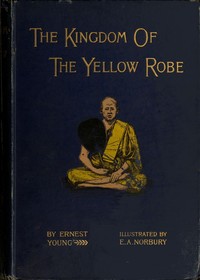
The Kingdom of the Yellow Robe: Being Sketches of the Domestic and Religious Rites and Ceremonies of the Siamese
Written by Ernest Young
Chaptra reads alongside you — AI insights, chapter breakdowns and reader discussions for every book. Join free
About this book
Reading guide
Themes, characters and key ideas in The Kingdom of the Yellow Robe: Being Sketches of the Domestic and Religious Rites and Ceremonies of the Siamese, written by Chaptra AI.
- about 10 hours
- intermediate
- observational
- informative
- historical
Ernest Young's "The Kingdom of the Yellow Robe" offers a meticulous late 19th-century ethnographic study of Siamese domestic and religious life, drawing from the author's extensive firsthand observations in Bangkok. The book begins by vividly introducing Bangkok as the "Venice of the East," setting a historical and cultural stage with descriptions of bustling street life and the diverse populace. Young systematically explores various facets of Siamese society, including intricate social dynamics, marriage customs, daily rituals, and profound religious ceremonies, particularly those rooted in Buddhism. While providing invaluable insights into a bygone era of Siam, the work is characterized by its detailed descriptive prose and the author's keen, though inherently Western, observational lens. It stands as a significant historical document for understanding the cultural fabric of Siam during a period of transition and increasing Western engagement.
“Bangkok, indeed, is the Venice of the East, a city of waterways where the very lifeblood of the nation flows.”
Key themes
- Cultural Observation and Documentation
- The foundational theme of the book, focusing on Young's meticulous effort to record and present the customs, traditions, and daily life of the Siamese people. It reflects the late 19th-century drive for ethnographic cataloging of non-Western cultures.
- Religious Practice and Buddhism's Centrality
- A core focus of the book, exploring the pervasive influence of Theravada Buddhism on all aspects of Siamese life. Young details the roles of monks, temple rituals, religious festivals, and how Buddhist principles permeate domestic and social customs.
- The Western Gaze and Cultural Interpretation
- This theme critically examines the inherent perspective of Young as a European observer in a non-Western society during the colonial era. It highlights how his interpretations, while detailed, are filtered through his cultural background, potentially leading to exoticism or misinterpretations of Siamese practices.
Worth discussing
How does Ernest Young's perspective as a Western observer in the late 19th century shape his portrayal of Siamese culture? What are the inherent biases?
Chapter-by-chapter breakdowns, character arcs and the full thematic analysis come with a free account.
Discussions
No one has started one yet
Questions this book opens up
No discussions yet
Be the first to start a discussion about this book!
Sign up to start the discussionReviews
No reviews yet
Be the first to review this book!