
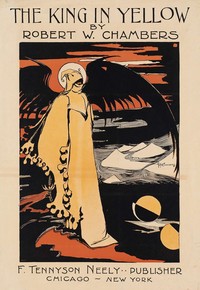
The King in Yellow
Written by Robert W. (Robert William) Chambers
Chaptra reads alongside you — AI insights, chapter breakdowns and reader discussions for every book. Join free
About this book
Read it with a club
Chaptra's fiction clubs — small groups reading the same books and talking as they go.


CraxMe Readers Book Club
Fiction
- 385 members
- 227 discussions
- Started December 2025
Welcome to the Readers Book Club. This is an informal group for like-minded people, where you can discuss books, share and recommend, track your reading progress, and lots more. Discuss Books — all about books. Discuss a particular book or genre, share your favourite quotes. Book Reviews — loved a book and highly recommend it? Or was it just average? Share your review and discuss with fellow readers. (May contain spoilers.) Group Reads — what is a book club without a group read! Buddy Reads — planning to read a book and looking for someone to read it with? Post in the Buddy Read request thread, find a reading buddy, and start discussing.
Read The King in Yellow alongside people who are reading it too.
Also here: Doorstops, First Lines Club
Chaptra Prime — paid clubs, every club feature, and unlimited reading support, for $5 a month or $60 once.
See PrimeReading guide
Themes, characters and key ideas in The King in Yellow, written by Chaptra AI.
- about 8 hours
- intermediate
- dark
- mysterious
- unsettling
Robert W. Chambers' "The King in Yellow" is a foundational work of weird fiction, a collection of short stories primarily known for its opening quartet of tales that introduce a fictional, forbidden play that drives its readers to madness. Set in a fin-de-siècle America, the book explores themes of psychological decay, existential dread, and the insidious influence of the supernatural, often centered around the mythical city of Carcosa and the enigmatic King in Yellow. While the collection later shifts into more conventional romantic and artistic narratives, its initial stories left an indelible mark on the horror genre, particularly through their atmospheric dread and the concept of a reality-shattering cosmic horror. The work masterfully blurs the lines between sanity and delusion, leaving readers with a lingering sense of unease and the pervasive threat of an unknowable, malevolent force.
“"Have you found the Yellow Sign?"”
Key themes
- Madness and Delusion
- The central theme, explored primarily through characters like Hildred Castaigne, whose perceptions of reality are shattered by the forbidden play. Madness is depicted as both a contagious disease and a consequence of confronting truths too terrible for the human mind to bear, blurring the lines between sanity and insanity.
- The Corrupting Power of Art and Forbidden Knowledge
- The titular play itself embodies this theme, acting as a piece of art so profound and terrible that it shatters the sanity of anyone who reads it. It suggests that certain truths or artistic expressions are not meant for human consumption, and seeking them leads to destruction rather than enlightenment.
- Cosmic Horror and Existential Dread
- Chambers' work, particularly the initial stories, lays groundwork for cosmic horror by hinting at vast, indifferent, and malevolent entities beyond human comprehension (The King in Yellow, Hastur) and locations (Carcosa). This instills a sense of existential dread, emphasizing humanity's insignificance in a universe governed by unknowable forces.
Worth discussing
How does the concept of a play that drives readers to madness function as a metaphor for the corrupting power of certain ideas or artistic expressions?
Chapter-by-chapter breakdowns, character arcs and the full thematic analysis come with a free account.
Discussions
No one has started one yet
Questions this book opens up
No discussions yet
Be the first to start a discussion about this book!
Sign up to start the discussionReviews
No reviews yet
Be the first to review this book!