
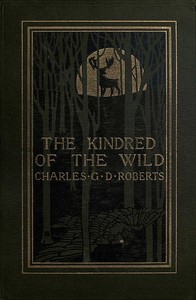
The Kindred of the Wild: A Book of Animal Life
Written by Charles G. D. Roberts
Chaptra reads alongside you — AI insights, chapter breakdowns and reader discussions for every book. Join free
About this book
Read it with a club
Small groups reading the same books and talking as they go.


News
- 4 members
- 1,813 discussions
- Active Sep 11
Read The Kindred of the Wild: A Book of Animal Life alongside people who are reading it too.
Also here: News Bulletin, Just Joking....
Chaptra Prime — paid clubs, every club feature, and unlimited reading support, for $5 a month or $60 once.
See PrimeReading guide
Themes, characters and key ideas in The Kindred of the Wild: A Book of Animal Life, written by Chaptra AI.
- about 10 hours
- intermediate
- evocative
- naturalistic
- poignant
Sir Charles G. D. Roberts' "The Kindred of the Wild" is a seminal collection that masterfully blends natural observation with imaginative storytelling to illuminate the lives of wild animals. Through a series of compelling narratives, the book explores the intricate behaviors, emotional landscapes, and survival struggles of various creatures within their natural habitats. Roberts' rich prose and introspective commentary aim to foster a profound sense of kinship between human readers and the animal kingdom, challenging purely anthropocentric views. By delving into animal psychology and motivations, the work champions the animal story as a literary form capable of revealing deeper connections to the environment and the shared experience of life.
“To understand the wild heart is to find a kinship deeper than blood, a bond forged in the ancient crucible of shared existence.”
Key themes
- Kinship Between Humans and Animals
- This is the core theme, directly stated in the book's title and introductory remarks. Roberts argues for a deep, empathetic connection between humanity and the animal kingdom, suggesting that understanding animal lives can lead to a recognition of shared experiences and a breakdown of anthropocentric barriers. He aims to rekindle a sense of unity and respect for all life.
- Survival in the Wild
- A fundamental and ever-present theme, illustrating the relentless struggle for existence in natural environments. Every animal story within the collection showcases the daily challenges of finding food, evading predators, enduring harsh weather, and competing for resources. It highlights the raw, unyielding laws of nature.
- Instinct, Emotion, and Intelligence in Animals
- Roberts delves into the inner lives of animals, moving beyond the simplistic view of them as purely instinct-driven beings. He explores how instinct intertwines with what appears to be learned behavior, cunning, and even emotional responses like fear, loyalty, love for offspring, and territorial pride. This theme challenges the strict dichotomy between human rationality and animal instinct.
Worth discussing
How does Roberts balance scientific observation with imaginative storytelling? Where do you think the line between the two lies in these narratives?
Chapter-by-chapter breakdowns, character arcs and the full thematic analysis come with a free account.
Discussions
No one has started one yet
Questions this book opens up
No discussions yet
Be the first to start a discussion about this book!
Sign up to start the discussionReviews
No reviews yet
Be the first to review this book!