
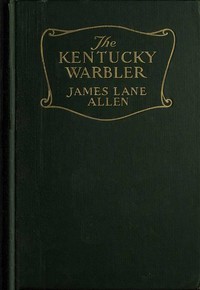
The Kentucky Warbler
Written by James Lane Allen
Chaptra reads alongside you — AI insights, chapter breakdowns and reader discussions for every book. Join free
About this book
Reading guide
Themes, characters and key ideas in The Kentucky Warbler, written by Chaptra AI.
- about 4 hours
- intermediate
- Reflective
- Nostalgic
- Exploratory
James Lane Allen's "The Kentucky Warbler" follows young Webster, a boy stifled by rigid schooling, as he embarks on a quest to find the elusive Kentucky warbler, inspired by a captivating lecture. This journey becomes a profound exploration of his burgeoning individuality and a yearning for freedom beyond the confines of societal and familial expectations in early 20th-century Kentucky. The narrative delves into the tension between his innate curiosity and the practical demands of his family, particularly his father and sister Elinor, as he seeks to understand the world through the lens of nature. Ultimately, Webster's pursuit of the warbler symbolizes his deeper journey of self-discovery and his struggle to forge his own path.
“The forest called to him with a thousand green voices, a promise of freedom unspoken.”
Key themes
- Nature vs. Civilization
- This theme explores the inherent tension between the untamed wilderness and the structured, man-made world of society, school, and family expectations. Webster finds solace, freedom, and true learning in nature, contrasting sharply with the restrictive and often stifling environment of civilization. The forest represents authenticity, wonder, and a deeper form of knowledge.
- Individuality and Self-Discovery
- Webster's quest for the Kentucky warbler is fundamentally a journey of self-discovery. He seeks to understand his own unique place in the world and to forge an identity distinct from the expectations placed upon him by family and society. His pursuit is an act of asserting his individuality and listening to his inner calling, rather than conforming to prescribed paths.
- Youth and Innocence
- The novel captures the unique perspective of youth, characterized by wonder, unbridled curiosity, and a fresh way of perceiving the world before it is dulled by adult cynicism or practicality. Webster's innocence allows him to see profound meaning in a simple bird, undertaking a quest with a purity of purpose that adults might deem irrational.
Worth discussing
How does Webster's quest for the Kentucky warbler symbolize his journey of self-discovery and individuality?
Chapter-by-chapter breakdowns, character arcs and the full thematic analysis come with a free account.
Discussions
No one has started one yet
Questions this book opens up
No discussions yet
Be the first to start a discussion about this book!
Sign up to start the discussionReviews
No reviews yet
Be the first to review this book!