
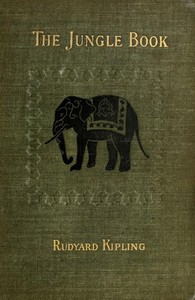
The Jungle Book
Written by Rudyard Kipling
Chaptra reads alongside you — AI insights, chapter breakdowns and reader discussions for every book. Join free
About this book
Reading guide
Themes, characters and key ideas in The Jungle Book, written by Chaptra AI.
- about 8 hours
- intermediate
- adventurous
- wild
- moralistic
Rudyard Kipling's "The Jungle Book" is a collection of allegorical tales, primarily centered around Mowgli, a "man-cub" raised by wolves in the Indian jungle. The stories chronicle Mowgli's adventures and coming-of-age as he learns the 'Law of the Jungle' from animal mentors like Baloo the bear and Bagheera the panther, while constantly facing threats from the tiger Shere Khan. Beyond Mowgli's narrative, the book explores profound themes of nature versus civilization, identity, law, and belonging, through vivid characterizations and a rich, often moralistic, narrative style. It stands as a seminal work in children's literature, captivating readers with its adventurous spirit and deep philosophical undertones, while also reflecting the colonial perspectives of its time.
“"For the strength of the Pack is the Wolf, and the strength of the Wolf is the Pack."”
Key themes
- The Law of the Jungle
- This theme explores the concept of a rigid, yet fair, code of conduct that governs the lives of the jungle animals. It emphasizes discipline, respect for elders, protection of the weak, and the balance of nature. The Law is presented as essential for survival and order, contrasting with human laws which are sometimes portrayed as arbitrary or corrupt.
- Identity and Belonging
- Mowgli's central struggle is his quest for identity, caught between the human and animal worlds. He belongs fully to neither, leading to feelings of alienation but also giving him unique strengths. This theme explores what it means to be 'human' or 'animal' and where one truly belongs.
- Nature vs. Civilization
- The book constantly contrasts the raw, often brutal, but ordered world of the jungle with the structured, yet sometimes cruel or superstitious, world of humans. It questions which environment truly embodies 'civilization' and which fosters true wisdom and freedom.
Worth discussing
How does Kipling define 'The Law of the Jungle,' and how does it compare to human laws or societal norms? Is it truly more just or effective?
Chapter-by-chapter breakdowns, character arcs and the full thematic analysis come with a free account.
Discussions
No one has started one yet
Questions this book opens up
No discussions yet
Be the first to start a discussion about this book!
Sign up to start the discussionReviews
No reviews yet
Be the first to review this book!