
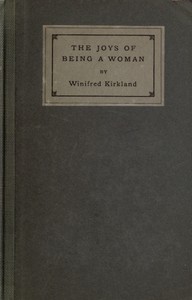
The Joys of Being a Woman, and Other Papers
Written by Winifred Margaretta Kirkland
Chaptra reads alongside you — AI insights, chapter breakdowns and reader discussions for every book. Join free
About this book
Reading guide
Themes, characters and key ideas in The Joys of Being a Woman, and Other Papers, written by Chaptra AI.
- about 6 hours
- intermediate
- reflective
- uplifting
- thought-provoking
Winifred Margaretta Kirkland's "The Joys of Being a Woman, and Other Papers," published in 1917, is a collection of thoughtful essays exploring the multifaceted experiences of womanhood in the early 20th century. Through reflective and often gentle prose, Kirkland delves into topics ranging from the intellectual life of women and the quiet satisfactions of domesticity to the nature of friendship and the pursuit of personal fulfillment. The book offers a nuanced perspective on societal expectations, advocating for women's spiritual and intellectual growth alongside their traditional roles. It serves as a contemplative meditation on self-discovery and the unique pleasures inherent in a woman's life, viewed through the lens of its historical context.
“The truest joy of being a woman lies not in what society expects, but in the cultivation of one's own soul and intellect.”
Key themes
- The Intellectual and Inner Life of Women
- A central theme is Kirkland's advocacy for women's intellectual development and the importance of their inner world. She asserts that women possess and require a rich intellectual life, arguing that this is not a luxury but a necessity for personal fulfillment, regardless of their external roles. She explores the challenges and rewards of solitary thought, reading, and personal study, asserting women's right to mental cultivation.
- The Joys of Domesticity and Everyday Life
- Kirkland explores the profound satisfaction and spiritual enrichment that can be found in the seemingly mundane aspects of domestic life and daily routines. She argues against the dismissal of these experiences, instead elevating them to opportunities for contemplation, creativity, and self-discovery. This theme emphasizes finding beauty and meaning in one's immediate surroundings and responsibilities, advocating for a mindful appreciation of the commonplace.
- Self-Discovery and Personal Autonomy
- Kirkland repeatedly emphasizes the journey of self-discovery and the importance of cultivating one's unique identity and spirit. While operating within the societal norms of her time, she champions an internal sense of autonomy, urging women to look inward for their worth and direction rather than solely relying on external validation or prescribed roles. This involves understanding one's own desires, strengths, and spiritual needs as a path to genuine joy.
Worth discussing
How do Kirkland's "joys of being a woman" compare to modern understandings of female fulfillment and empowerment?
Chapter-by-chapter breakdowns, character arcs and the full thematic analysis come with a free account.
Discussions
No one has started one yet
Questions this book opens up
No discussions yet
Be the first to start a discussion about this book!
Sign up to start the discussionReviews
No reviews yet
Be the first to review this book!