
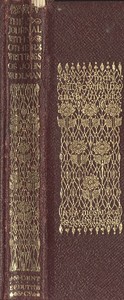
The Journal, with Other Writings of John Woolman
Written by John Woolman
Chaptra reads alongside you — AI insights, chapter breakdowns and reader discussions for every book. Join free
About this book
Read it with a club
Small groups reading the same books and talking as they go.


News
- 4 members
- 1,813 discussions
- Active Sep 11
Read The Journal, with Other Writings of John Woolman alongside people who are reading it too.
Also here: News Bulletin, Just Joking....
Chaptra Prime — paid clubs, every club feature, and unlimited reading support, for $5 a month or $60 once.
See PrimeReading guide
Themes, characters and key ideas in The Journal, with Other Writings of John Woolman, written by Chaptra AI.
- about 8 hours
- intermediate
- reflective
- earnest
- spiritual
John Woolman's Journal is an 18th-century autobiographical account detailing his profound spiritual journey and unwavering commitment to moral principles as a Quaker. The work meticulously chronicles his pursuit of a pure life guided by an 'inner light' and his growing conviction against social injustices, most notably slavery. Woolman's reflections encompass his deep connection to nature, his advocacy for simplicity, and his compassionate engagement with humanity. It stands as a powerful testament to personal integrity, non-conformity, and the practical application of spiritual ethics to societal reform. The Journal remains a significant document for its insights into early American religious thought and its pioneering stance in the abolitionist movement.
“To turn all we possess into the channel of universal love, becomes the business of our lives.”
Key themes
- Spiritual Purity & The Inner Light
- Central to Quaker theology, this theme emphasizes the direct accessibility of divine guidance ('the inner light') to every individual. Woolman's life is a constant endeavor to purify his heart and actions, ensuring they align with this inner prompting. His introspection and commitment to conscience are direct manifestations of this theme, leading to moral clarity and unwavering conviction.
- Social Justice & The Abolition of Slavery
- This is a cornerstone of Woolman's work. He viewed slavery as a profound moral evil, a direct violation of Christian love and human dignity. His persistent, yet gentle, efforts to persuade fellow Quakers to abandon slavery, refusing to profit from it himself, were pioneering and deeply influential in the early abolitionist movement.
- Simplicity & Plainness
- Woolman passionately advocated for a life of simplicity, free from unnecessary luxuries, ostentation, and the pursuit of excessive wealth. He believed that such pursuits distracted from spiritual duties, fostered pride, and often led to the oppression of others. This extended to plain dress, diet, and a humble dwelling, reflecting a commitment to living in harmony with all creation.
Worth discussing
How does Woolman's concept of the 'inner light' influence his ethical decisions and actions?
Chapter-by-chapter breakdowns, character arcs and the full thematic analysis come with a free account.
Discussions
No one has started one yet
Questions this book opens up
No discussions yet
Be the first to start a discussion about this book!
Sign up to start the discussionReviews
No reviews yet
Be the first to review this book!