
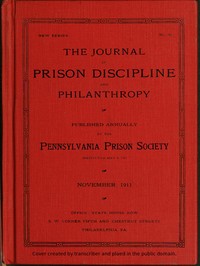
The Journal of Prison Discipline and Philanthropy (New Series, No. 50) November 1911
Written by Pennsylvania Prison Society
Chaptra reads alongside you — AI insights, chapter breakdowns and reader discussions for every book. Join free
About this book
Reading guide
Themes, characters and key ideas in The Journal of Prison Discipline and Philanthropy (New Series, No. 50) November 1911, written by Chaptra AI.
- about 6 hours
- advanced
- analytical
- reformist
- serious
This issue of "The Journal of Prison Discipline and Philanthropy" from November 1911 serves as a vital historical document reflecting the progressive era's approach to penology and social reform. Published by the Pennsylvania Prison Society, it compiles articles, reports, and discussions aimed at advocating for humane and effective prison practices, emphasizing rehabilitation over mere punishment. The journal addresses the complex societal challenges related to crime, poverty, and institutional management, providing insights into the evolving philosophies of justice and the conditions of incarceration in the early 20th century. It offers a window into the intellectual and practical efforts to improve the lives of prisoners and enhance public safety through systemic change.
“"The true measure of a civilization is how it treats its prisoners."”
Key themes
- Rehabilitation vs. Punishment
- This is the central philosophical tension explored throughout the journal. It consistently advocates for a shift from purely punitive measures to approaches focused on reforming the individual, preparing them for reintegration into society. This includes discussions of education, vocational training, and psychological support.
- Social Responsibility and Prevention of Crime
- The journal often extends its analysis beyond the prison walls to consider the root causes of crime, such as poverty, lack of education, and social inequality. It argues that society has a collective responsibility not only to address crime but also to prevent it by improving social conditions.
- Institutional Reform and Humane Treatment
- A core focus of the journal is the critique of existing prison conditions and the advocacy for more humane, sanitary, and efficiently managed institutions. This includes advocating for better architecture, hygiene, diet, and oversight to ensure prisoners' basic rights and dignity.
Worth discussing
How did the Progressive Era influence the philosophies of prison reform presented in this journal?
Chapter-by-chapter breakdowns, character arcs and the full thematic analysis come with a free account.
Discussions
No one has started one yet
Questions this book opens up
No discussions yet
Be the first to start a discussion about this book!
Sign up to start the discussionReviews
No reviews yet
Be the first to review this book!