
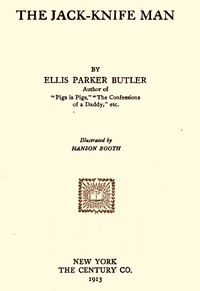
The Jack-Knife Man
Written by Ellis Parker Butler
Chaptra reads alongside you — AI insights, chapter breakdowns and reader discussions for every book. Join free
About this book
Reading guide
Themes, characters and key ideas in The Jack-Knife Man, written by Chaptra AI.
- about 8 hours
- intermediate
- Reflective
- Melancholy
- Hopeful
Ellis Parker Butler's "The Jack-Knife Man" introduces Peter Lane, a solitary shanty-boatman whose simple life of crafting and fishing is disrupted by the persistent George Rapp, who seeks to buy Peter's beloved boat. Despite his initial desire for solitude, Peter's innate kindness is revealed when he offers refuge to the tragic Lize Merdin and her child during a storm, an act that fundamentally shifts his perspective. This early 20th-century novel explores themes of loneliness, compassion, and the unexpected burdens and joys of responsibility. Peter's journey on the river becomes a metaphor for his internal navigation from self-reliance to a deeper connection with humanity and the formation of an unconventional family.
“A man's home ain't just wood and nails, it's the quiet space where his dreams can breathe and his thoughts can wander free.”
Key themes
- Loneliness and Connection
- The novel deeply explores the human experience of solitude, contrasting Peter Lane's initial contentment with his eventual yearning for and embrace of human connection. It examines the nuances of choosing isolation versus being isolated, and the profound impact of forging bonds with others.
- Compassion and Responsibility
- This theme highlights Peter's innate kindness and his unexpected journey into taking on the responsibility for others. It explores how acts of compassion, even spontaneous ones, can lead to profound personal growth and alter the course of one's life, particularly in caring for the vulnerable.
- Parenthood and Found Family
- Drawing from the 'Orphans' and 'Fathers and sons' genre tags, this theme examines how Peter, a solitary man, unexpectedly steps into a paternal role for Lize Merdin's child and forms an unconventional family unit. It explores the challenges and rewards of chosen family bonds, transcending biological ties.
Worth discussing
How does Peter Lane's initial embrace of solitude evolve throughout the novel, and what catalysts drive this change?
Chapter-by-chapter breakdowns, character arcs and the full thematic analysis come with a free account.
Discussions
No one has started one yet
Questions this book opens up
No discussions yet
Be the first to start a discussion about this book!
Sign up to start the discussionReviews
No reviews yet
Be the first to review this book!