
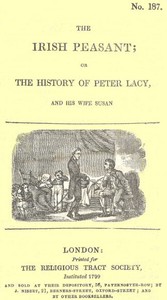
The Irish Peasant; Or, The History of Peter Lacy and His Wife Susan
Written by Religious Tract Society (Great Britain)
Chaptra reads alongside you — AI insights, chapter breakdowns and reader discussions for every book. Join free
About this book
Reading guide
Themes, characters and key ideas in The Irish Peasant; Or, The History of Peter Lacy and His Wife Susan, written by Chaptra AI.
- about 8 hours
- intermediate
- didactic
- somber
- hopeful
"The Irish Peasant; Or, The History of Peter Lacy and His Wife Susan" is a 19th-century religious tract that chronicles the spiritual journey of Peter Lacy, a struggling Irish laborer, and his wife Susan. The narrative explores their arduous life marked by poverty and marital discord, serving as a backdrop for deeper moral and spiritual themes. Through the exemplary Christian life and eventual death of their neighbor, Michael Connor, Peter is confronted with his own sins and the urgent need for divine grace. The book ultimately depicts Peter's transformation from a man burdened by worldly troubles and spiritual neglect to one who embraces Christian faith, humility, and the promise of eternal hope.
“The burden of my sins pressed heavier upon my soul than any earthly toil or poverty.”
Key themes
- Spiritual Redemption and Salvation
- This is the central theme, exploring Peter Lacy's journey from a state of spiritual ignorance and sin to one of profound faith and salvation through divine grace. The book emphasizes that true peace and hope are found not in worldly possessions or circumstances, but in a personal relationship with God and repentance for sins.
- Mortality and Spiritual Awakening
- The death of Michael Connor is a pivotal event that underscores the theme of mortality as a catalyst for spiritual awakening. It forces Peter to confront his own finite existence and the urgency of preparing his soul for eternity, moving him from complacency to active pursuit of faith.
- Poverty and Social Conditions
- The book vividly depicts the harsh realities of poverty faced by the Irish peasantry in the 19th century. While not a social reform tract, it uses these conditions as a significant backdrop, illustrating how material hardship can exacerbate spiritual struggles, but also how faith can provide resilience and contentment despite destitution.
Worth discussing
How does the book use the setting of 19th-century Irish poverty to emphasize its spiritual message?
Chapter-by-chapter breakdowns, character arcs and the full thematic analysis come with a free account.
Discussions
No one has started one yet
Questions this book opens up
No discussions yet
Be the first to start a discussion about this book!
Sign up to start the discussionReviews
No reviews yet
Be the first to review this book!