
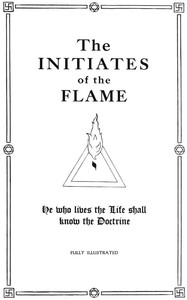
The Initiates of the Flame
Written by Manly P. (Manly Palmer) Hall
Chaptra reads alongside you — AI insights, chapter breakdowns and reader discussions for every book. Join free
About this book
Reading guide
Themes, characters and key ideas in The Initiates of the Flame, written by Chaptra AI.
- about 10 hours
- advanced
- mysterious
- philosophical
- inspirational
Manly P. Hall's "The Initiates of the Flame" is a foundational text in esoteric philosophy, exploring the concept of spiritual initiation through the lens of ancient mystery traditions. It delves into the hidden meanings behind various myths, symbols, and rituals across different cultures, asserting that these represent a universal path to enlightenment. Hall argues that true initiation involves a profound personal transformation, leading to a deeper understanding of universal laws and one's place within the cosmos. The book serves as a guide for those seeking to uncover the esoteric wisdom embedded in humanity's spiritual heritage, emphasizing the importance of self-mastery and the pursuit of truth.
“To the initiate, the flame is the symbol of life, of light, of purification, and of the creative power of God.”
Key themes
- Esoteric Wisdom and Ancient Mysteries
- This theme explores the idea that throughout history, certain profound spiritual and philosophical truths have been preserved in secret or semi-secret traditions, known as mystery schools. Hall argues that these traditions, from Egypt to Greece and beyond, shared a common core of wisdom regarding the nature of the cosmos, humanity, and the divine. He seeks to unveil these hidden teachings, demonstrating their universality and timelessness.
- Spiritual Evolution and Personal Transformation
- Central to Hall's philosophy is the concept of humanity's ongoing spiritual evolution. The book posits that individuals are not static beings but are capable of profound personal transformation through conscious effort and the pursuit of wisdom. Initiation, in this context, is not merely a ritual but an internal process of awakening the higher self and aligning with universal laws, leading to a more enlightened state of being.
- Symbolism as the Language of Truth
- Hall consistently emphasizes that symbols are not merely decorative but are profound carriers of esoteric knowledge, acting as a universal language that transcends cultural and linguistic barriers. He argues that ancient peoples encoded their deepest truths within symbolic forms – myths, rituals, architecture, and art – to preserve them from degradation and to communicate them to those prepared to understand. The book is largely an exercise in decoding these symbols.
Worth discussing
What does Hall mean by 'the Flame,' and how does it relate to individual spiritual growth?
Chapter-by-chapter breakdowns, character arcs and the full thematic analysis come with a free account.
Discussions
No one has started one yet
Questions this book opens up
No discussions yet
Be the first to start a discussion about this book!
Sign up to start the discussionReviews
No reviews yet
Be the first to review this book!