
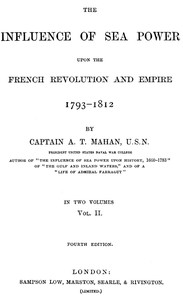
The Influence of Sea Power upon the French Revolution and Empire 1793-1812, vol 2
Written by A. T. (Alfred Thayer) Mahan
Chaptra reads alongside you — AI insights, chapter breakdowns and reader discussions for every book. Join free
About this book
Reading guide
Themes, characters and key ideas in The Influence of Sea Power upon the French Revolution and Empire 1793-1812, vol 2, written by Chaptra AI.
- about 25 hours
- advanced
- analytical
- strategic
- historical
Alfred Thayer Mahan's "The Influence of Sea Power upon the French Revolution and Empire, 1793-1812, vol 2" is a seminal historical analysis arguing for the decisive role of naval supremacy in shaping the outcomes of the French Revolutionary and Napoleonic Wars. This volume meticulously details how Britain's command of the seas, through strategic blockades and key naval victories, consistently undermined France's continental triumphs and ambitious foreign policies. Mahan illustrates how Napoleon Bonaparte's land-based genius was ultimately constrained and nullified by his nation's maritime inferiority, leading to long-term strategic and economic disadvantages. The work provides a rigorous examination of the interplay between military strategy, political stability, and economic power, all viewed through the lens of naval dominance, from the turbulent Directory period to the height of the Empire's struggles against external coalitions.
“The control of the sea, by which alone an island nation can maintain its independence and prosperity, was, for France, but one factor in a complex strategic equation, often overlooked to her peril.”
Key themes
- The Decisive Influence of Sea Power
- This is Mahan's overarching thesis: that control of the seas is the paramount factor in determining the outcome of large-scale conflicts and the rise and fall of empires. He argues that Britain's naval supremacy allowed it to sustain long wars, project power globally, and ultimately contain and defeat land-dominant France.
- Interplay of Land and Sea Warfare
- Mahan meticulously demonstrates that land victories, no matter how brilliant, could not secure ultimate strategic objectives without complementary sea power. He shows how continental successes were often undermined by naval inferiority, which prevented sustained supply, colonial expansion, and effective economic warfare.
- Economic Warfare and Blockades
- The book highlights how naval power was wielded as an economic weapon, primarily through blockades. Mahan analyzes the effectiveness of British blockades in stifling French trade and colonial ventures, and conversely, the failure of Napoleon's Continental System to achieve its aims due to the resilience of British sea power.
Worth discussing
To what extent does Mahan's thesis on sea power remain relevant in contemporary geopolitical strategy, particularly in an age of air power and cyber warfare?
Chapter-by-chapter breakdowns, character arcs and the full thematic analysis come with a free account.
Discussions
No one has started one yet
Questions this book opens up
No discussions yet
Be the first to start a discussion about this book!
Sign up to start the discussionReviews
No reviews yet
Be the first to review this book!