
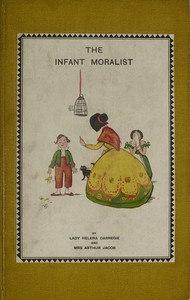
The infant moralist
Written by Violet Jacob,Helena Carnegie
Chaptra reads alongside you — AI insights, chapter breakdowns and reader discussions for every book. Join free
About this book
This work by Jacob, Violet, Carnegie, Helena, Lady offers readers a unique literary experience. The narrative explores themes of conduct of life and children's poetry.
Reading guide
Themes, characters and key ideas in The infant moralist, written by Chaptra AI.
- about 8 hours
- intermediate
- humorous
- didactic
- lighthearted
"The infant moralist" is a delightful collection of children's poetry, penned by Violet Jacob and Helena, Lady Carnegie, that cleverly blends didactic instruction with engaging humor. Through a series of short, often rhyming verses, the book aims to guide young readers on matters of conduct and character, presenting moral lessons in a lighthearted and memorable fashion. Far from being overtly preachy, its charm lies in its witty observations of childhood foibles and the gentle satire applied to common misbehaviors, making the assimilation of virtues both entertaining and accessible for its target audience.
“As this analysis is conducted without access to the full text, specific quotes cannot be provided. However, one would expect quotes that are rhyming, often with a humorous twist, and deliver a concise moral lesson. Examples might include: 'A little fib, however small, can make a giant trouble fall,' or 'The child who shares their sweets and toys, finds friendship brings the greatest joys,' or 'A tidy room, a happy mind, good habits are the best to find.'”
Key themes
- The Importance of Good Conduct
- This is the central theme, explicitly stated by the title. The book explores various facets of 'good conduct' for children, including honesty, obedience, tidiness, sharing, and respect. Each poem typically highlights a specific virtue or warns against a particular misbehavior, demonstrating its positive or negative consequences.
- Humor as a Teaching Tool
- The book masterfully uses humor, wit, and gentle satire to make moral lessons enjoyable and memorable. Rather than stern lectures, the poems often depict the absurd or amusing outcomes of misbehavior, prompting laughter while simultaneously imparting wisdom. This approach makes the didactic content palatable and engaging for young readers.
- Childhood Innocence and Mischief
- The poems present a nuanced view of childhood, acknowledging both the inherent innocence and the natural inclination towards mischief, curiosity, and occasional disobedience. The book doesn't condemn these traits but rather guides children on how to navigate them within the bounds of good behavior, often with empathy for their struggles.
Worth discussing
How does humor serve as a tool for moral instruction in this collection, and is it more effective than a serious approach?
Chapter-by-chapter breakdowns, character arcs and the full thematic analysis come with a free account.
Discussions
No one has started one yet
Questions this book opens up
No discussions yet
Be the first to start a discussion about this book!
Sign up to start the discussionReviews
No reviews yet
Be the first to review this book!