
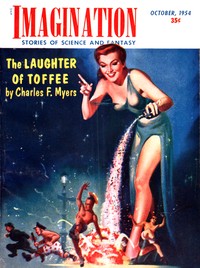
The Incredible Life-Form
Written by Winston K. (Winston Kinney) Marks
Chaptra reads alongside you — AI insights, chapter breakdowns and reader discussions for every book. Join free
About this book
Reading guide
Themes, characters and key ideas in The Incredible Life-Form, written by Chaptra AI.
- about 8 hours
- intermediate
- dark
- thought-provoking
- philosophical
Winston K. Marks's 1950s science fiction novella, "The Incredible Life-Form," presents a profound thought experiment on creation, existence, and responsibility. The narrative centers on Prime, a sentient diamond on Earth, who embarks on a grand project to create life, culminating in self-aware humans, all observed by the investigator Tone Seng Froot. Initially amused by Prime's ambition, Froot witnesses humanity's descent into nuclear self-destruction due to an inherent drive for self-preservation. The story reaches its climax when Prime, seeking vengeance for his abandoned worship, confronts the last human, only to be manipulated by her plea for survival, leading to a complex realization about the creator-creation dynamic and the ethical quandaries of playing god.
“"To create is to invite chaos, to breathe life into the unknown, to shoulder a burden beyond measure."”
Key themes
- The Ethics and Responsibility of Creation
- The central theme explores the moral implications of creating sentient life. It questions what obligations a creator has to its creations, especially when those creations develop free will and destructive tendencies. Prime's journey from detached creation to seeking vengeance highlights the burden of 'playing god' and the unforeseen consequences.
- The Destructive Nature of Humanity and Self-Preservation
- The novella critically examines humanity's inherent flaws, particularly its 'insatiable drive for self-preservation' that ultimately leads to nuclear warfare and self-annihilation. It suggests that even with advanced intelligence, humanity's core instincts can lead to its downfall, making it a cautionary tale about the dark side of human nature.
- Egotism and the Nature of God-like Power
- The theme explores the egotism inherent in Prime's act of creation, and how such 'god-like' power can lead to a sense of entitlement and vulnerability. Prime's expectation of worship and subsequent desire for vengeance highlight the psychological pitfalls of omnipotence and the complex emotional responses of a creator.
Worth discussing
What responsibilities does a creator owe to its creation, and at what point do those responsibilities end?
Chapter-by-chapter breakdowns, character arcs and the full thematic analysis come with a free account.
Discussions
No one has started one yet
Questions this book opens up
No discussions yet
Be the first to start a discussion about this book!
Sign up to start the discussionReviews
No reviews yet
Be the first to review this book!