
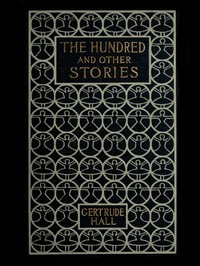
The Hundred, and Other Stories
Written by Gertrude Hall Brownell
Chaptra reads alongside you — AI insights, chapter breakdowns and reader discussions for every book. Join free
About this book
Reading guide
Themes, characters and key ideas in The Hundred, and Other Stories, written by Chaptra AI.
- about 8 hours
- intermediate
- reflective
- poignant
- societal
Gertrude Hall's "The Hundred, and Other Stories" is a late 19th-century collection offering vignettes that subtly examine the social stratification and human dynamics within a well-to-do society. The titular story, set on Christmas Eve, introduces Mrs. Darling, her maid Mrs. Bonnet, and a generous act involving a hundred dolls for underprivileged children, which serves as a lens to explore contrasts between wealth and poverty. Through the quiet observations of household staff and the hopeful anticipation of a poor child named Tibbie, the collection delves into themes of charity, childhood innocence, and the often-unseen lives of the working class. The narrative skillfully uses the holiday setting to highlight both the promise of joy and deeper societal reflections.
“"The air in Mrs. Darling's household, usually taut with her exacting temperament, seemed to exhale a sigh of relief once her carriage rolled away."”
Key themes
- Social Class Disparity
- The most prominent theme, explored through the stark contrast between Mrs. Darling's opulent life and the humble existence of her staff and the recipient children. The narrative meticulously details the different realities experienced by the wealthy and the working class within the same household and society.
- Charity and Philanthropy
- The narrative directly engages with the theme of charity through Mrs. Darling's donation of dolls. It invites reflection on the motivations behind such acts, their presentation, and their impact on both the giver and the receiver, subtly questioning whether charity truly bridges gaps or merely highlights them.
- Childhood Innocence and Hope
- Primarily explored through the character of Tibbie, the theme highlights the pure wonder and hope that children embody, especially in the face of hardship. The dolls represent a tangible manifestation of dreams and the enduring spirit of optimism, even amidst stark societal realities.
Worth discussing
How does the setting of Christmas Eve enhance or complicate the themes of charity and social class in 'The Hundred'?
Chapter-by-chapter breakdowns, character arcs and the full thematic analysis come with a free account.
Discussions
No one has started one yet
Questions this book opens up
No discussions yet
Be the first to start a discussion about this book!
Sign up to start the discussionReviews
No reviews yet
Be the first to review this book!