
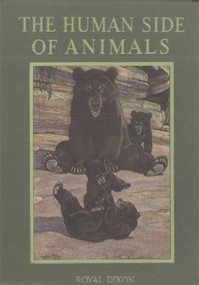
The Human Side of Animals
Written by Royal Dixon
Chaptra reads alongside you — AI insights, chapter breakdowns and reader discussions for every book. Join free
About this book
Reading guide
Themes, characters and key ideas in The Human Side of Animals, written by Chaptra AI.
- about 8 hours
- intermediate
- thought-provoking
- reflective
- scientific
Royal Dixon's "The Human Side of Animals," an early 20th-century scientific publication, challenges the prevailing view of animals as mere instinct-driven beings. Through a collection of observations and anecdotes, Dixon meticulously argues for the existence of complex emotional and intellectual lives in various animal species. The book, introduced by a foreword urging a perceptual shift, invites readers to recognize similarities between human and animal experiences, emphasizing their capacity for affection, grief, and intelligence. By exploring concepts like camouflage and animal behavior, Dixon seeks to foster a deeper understanding and appreciation for the rich inner lives of non-human creatures, thereby challenging traditional scientific dismissals of animal experiences.
“Just as humans have emotions and social connections, so do animals.”
Key themes
- Animal Sentience and Consciousness
- This is the core argument of the book, positing that animals are not mere automatons driven solely by instinct but possess complex inner lives, including emotions, intellect, and the capacity for affection and grief. Dixon challenges the prevailing scientific views of the early 20th century by presenting observations that suggest a rich subjective experience in animals.
- Challenging Anthropocentric Views
- Dixon directly confronts the human-centric perspective that places humanity at the apex of intelligence and emotion, often dismissing animal experiences as inferior or non-existent. He urges readers to break free from this bias and recognize the inherent value, complexity, and shared capacities of non-human life.
- Nature's Complexity and Adaptation
- The book delves into the intricate mechanisms of the natural world, particularly focusing on how animals adapt to their environments. The initial chapter on camouflage serves as a prime example, illustrating the sophisticated evolutionary strategies animals employ for survival, highlighting the wonders and complexities of nature's design and the active role animals play within it.
Worth discussing
How does Dixon challenge the traditional scientific views of his time regarding animal intelligence and emotion?
Chapter-by-chapter breakdowns, character arcs and the full thematic analysis come with a free account.
Discussions
No one has started one yet
Questions this book opens up
No discussions yet
Be the first to start a discussion about this book!
Sign up to start the discussionReviews
No reviews yet
Be the first to review this book!