
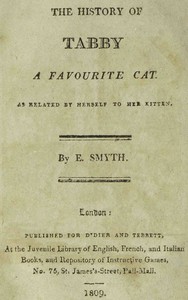
About this book
This work by Smyth, E. offers readers a unique literary experience. The narrative explores themes of conduct of life and animal welfare.
Reading guide
Themes, characters and key ideas in The history of Tabby, a favourite cat : $b As related by herself to her kitten, written by Chaptra AI.
- about 8 hours
- beginner
- charming
- instructive
- nostalgic
E. Smyth's "The History of Tabby, a Favourite Cat" presents a charming and instructive first-person autobiography narrated by Tabby, a domestic cat, to her inquisitive kitten. Through a series of anecdotes and observations from her varied life, Tabby recounts her experiences with different human owners, the joys and perils of her existence, and the lessons she has learned about life, loyalty, and the nature of both felines and humans. The narrative serves as a gentle moral guide, subtly advocating for kindness towards animals and reflecting on the simple pleasures and challenges of a pet's world, all while offering a unique perspective on 18th or 19th-century domestic life.
“"Ah, my dear kitten, were you to know the varied scenes of my life, you would better understand the world you are just beginning to explore."”
Key themes
- Animal Perspective and Anthropomorphism
- The entire narrative is framed from Tabby's first-person perspective, allowing readers to experience the world through the senses and understanding of a cat. This challenges human-centric views and encourages empathy by giving voice and inner life to an animal.
- Responsibility and Care for Animals
- Through Tabby's varied experiences with different owners, the book subtly highlights the spectrum of human responsibility towards animals, from loving care to neglect. It serves as an implicit lesson on the moral obligations of pet ownership.
- Domestic Life and Social Observation
- Tabby's position as an observer within various households provides a unique lens through which to view 18th/19th-century domestic life, including family dynamics, daily routines, and social customs, albeit from a non-human perspective.
Worth discussing
How does Tabby's perspective challenge or confirm your understanding of animal intelligence and emotions?
Chapter-by-chapter breakdowns, character arcs and the full thematic analysis come with a free account.
Discussions
No one has started one yet
Questions this book opens up
No discussions yet
Be the first to start a discussion about this book!
Sign up to start the discussionReviews
No reviews yet
Be the first to review this book!