
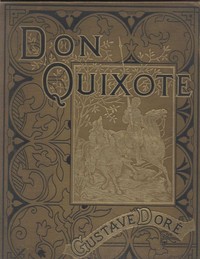
The History of Don Quixote, Volume 1, Complete
Written by Miguel de Cervantes Saavedra
Chaptra reads alongside you — AI insights, chapter breakdowns and reader discussions for every book. Join free
About this book
Reading guide
Themes, characters and key ideas in The History of Don Quixote, Volume 1, Complete, written by Chaptra AI.
- about 40 hours
- advanced
- humorous
- satirical
- philosophical
Miguel de Cervantes Saavedra's "The History of Don Quixote, Volume 1" introduces Alonso Quijano, an aging hidalgo who, having read too many chivalric romances, descends into madness and decides to become a knight-errant named Don Quixote de la Mancha. Accompanied by his pragmatic squire, Sancho Panza, Quixote embarks on a series of misadventures across the Spanish countryside, continually mistaking inns for castles, windmills for giants, and common folk for enchanted beings. The novel masterfully blends humor, satire, and profound philosophical inquiry, challenging the boundaries between illusion and reality while critiquing the literary conventions of its time. It chronicles Quixote's initial sallies, his recruitment of Sancho, and their numerous encounters that often end in comic disaster, all driven by Quixote's unwavering idealism and fervent imagination.
“"When life itself is mad, who knows where madness lies? Perhaps to be too sane is madness itself. And to surrender to ideals, to dream of what can never be, is not that the highest wisdom?"”
Key themes
- Idealism vs. Realism
- This is the central thematic tension of the novel, embodied by Don Quixote's fantastical idealism clashing with Sancho Panza's grounded realism. Quixote views the world through the lens of chivalric romance, transforming mundane reality into heroic adventures, while Sancho constantly points out the harsh truths of their surroundings. This dichotomy explores the nature of perception and the human capacity for both noble aspiration and practical survival.
- Madness and Sanity
- The novel deeply explores the nature of madness, particularly Quixote's chivalric delusion. While clearly insane by conventional standards, Quixote often displays profound wisdom and eloquence when not discussing chivalry, leading to questions about the definition of sanity. His madness is presented as both a source of comedy and a tragic isolation, challenging readers to consider whether his 'madness' is merely an extreme form of idealism or a genuine mental affliction.
- The Power of Imagination and Fiction
- Cervantes explores how literature and imagination can shape, and even overwrite, reality. Quixote's entire world is constructed from the books he has read, demonstrating fiction's immense power to inspire, delude, and provide meaning. The novel itself, through its metafictional elements, comments on the creative process and the impact of stories on individuals and culture.
Worth discussing
How does Cervantes use Don Quixote's madness to explore the nature of reality and illusion?
Chapter-by-chapter breakdowns, character arcs and the full thematic analysis come with a free account.
Discussions
No one has started one yet
Questions this book opens up
No discussions yet
Be the first to start a discussion about this book!
Sign up to start the discussionReviews
No reviews yet
Be the first to review this book!