
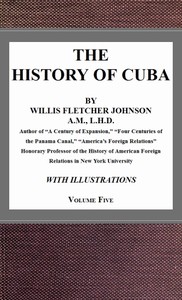
The History of Cuba, vol. 5
Written by Willis Fletcher Johnson
Chaptra reads alongside you — AI insights, chapter breakdowns and reader discussions for every book. Join free
About this book
Reading guide
Themes, characters and key ideas in The History of Cuba, vol. 5, written by Chaptra AI.
- about 15 hours
- advanced
- informative
- analytical
- historical
Willis Fletcher Johnson's "The History of Cuba, vol. 5" is an early 20th-century historical account that meticulously explores Cuba's multifaceted development, emphasizing its abundant natural resources and strategic geographical position. The volume delves into the island's climate, agriculture, and the intricate tapestry of its cultural groups, all within the overarching context of its struggle for independence. Johnson posits Cuba as a nation of immense potential, historically constrained by foreign domination, yet poised for future progress. The work serves as a comprehensive examination of Cuba's inherent advantages and the resilience of its people in the modern era following its newfound sovereignty.
“Cuba, by virtue of its matchless climate and fertile soil, is an island destined for greatness, yet long held captive by the chains of foreign dominion.”
Key themes
- National Identity and Independence
- This theme explores Cuba's journey to define itself as a sovereign nation, separate from colonial powers. Johnson emphasizes the struggle for self-determination as central to Cuba's past and future, linking independence to the realization of its full potential.
- Colonialism and Exploitation vs. Untapped Potential
- Johnson contrasts Cuba's inherent wealth and strategic advantages with the detrimental effects of centuries of foreign rule. This theme highlights how colonial powers exploited resources and suppressed development, preventing Cuba from reaching its 'destined' greatness.
- Geographical and Economic Determinism
- This theme explores how Cuba's unique geography, climate, and natural resources are presented as fundamental determinants of its character, potential, and historical trajectory. Johnson suggests that these factors inherently shape the island's destiny and economic opportunities.
Worth discussing
How does Johnson's early 20th-century perspective on Cuba's potential compare with its actual historical trajectory?
Chapter-by-chapter breakdowns, character arcs and the full thematic analysis come with a free account.
Discussions
No one has started one yet
Questions this book opens up
No discussions yet
Be the first to start a discussion about this book!
Sign up to start the discussionReviews
No reviews yet
Be the first to review this book!