
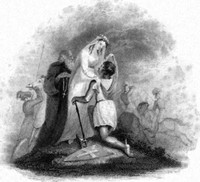
The History of Chivalry; Or, Knighthood and Its Times, Volume 1 (of 2)
Written by Charles Mills
Chaptra reads alongside you — AI insights, chapter breakdowns and reader discussions for every book. Join free
About this book
Reading guide
Themes, characters and key ideas in The History of Chivalry; Or, Knighthood and Its Times, Volume 1 (of 2), written by Chaptra AI.
- about 12 hours
- advanced
- academic
- historical
- informative
Charles Mills's "The History of Chivalry, Volume 1" is an early 19th-century scholarly endeavor to comprehensively document the origins, evolution, and cultural impact of knighthood in medieval Europe. Mills meticulously traces chivalry from its martial roots post-Roman Empire, through its profound transformation by Christian ideals, to its peak as a complex social, military, and moral institution. The volume delves into the often-overlooked practical aspects of chivalric society, such as the education of knights and the mechanics of tournaments, alongside the romanticized notions of honor, courtly love, and the defense of the oppressed. It serves as a foundational text for understanding how chivalry shaped medieval European society and its enduring legacy.
“"Chivalry, in its full and perfect sense, was a military and religious institution; a combination of the religious spirit with the profession of arms."”
Key themes
- The Evolution of Chivalry
- This is the overarching theme, as Mills meticulously traces the development of chivalry from its rudimentary origins in post-Roman Germanic warrior cultures to its highly formalized and idealized state in the High Middle Ages. He illustrates how external factors, particularly Christianity, and internal societal needs shaped its changing forms and meanings.
- The Influence of Christianity on Knighthood
- Mills argues compellingly that Christianity was the primary force that elevated mere martial prowess into the moral and spiritual institution of chivalry. He details how the Church infused the knightly code with principles of piety, justice, and the defense of the faith, transforming warriors into 'Knights of Christ' and justifying actions like the Crusades.
- The Ideal vs. Reality of Chivalry
- While Mills often presents a somewhat romanticized view, he implicitly and explicitly grapples with the tension between the lofty ideals of chivalry (honor, justice, gallantry) and the often brutal, self-interested, and violent realities of medieval aristocratic life. He shows how the code was an aspiration, often honored in the breach, yet powerful as a social regulator.
Worth discussing
How does Mills's 19th-century perspective influence his interpretation of medieval chivalry, particularly regarding its ideals vs. realities?
Chapter-by-chapter breakdowns, character arcs and the full thematic analysis come with a free account.
Discussions
No one has started one yet
Questions this book opens up
No discussions yet
Be the first to start a discussion about this book!
Sign up to start the discussionReviews
No reviews yet
Be the first to review this book!