
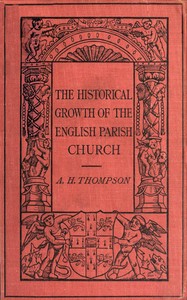
The Historical Growth of the English Parish Church
Written by A. Hamilton (Alexander Hamilton) Thompson
Chaptra reads alongside you — AI insights, chapter breakdowns and reader discussions for every book. Join free
About this book
Reading guide
Themes, characters and key ideas in The Historical Growth of the English Parish Church, written by Chaptra AI.
- about 15 hours
- advanced
- informative
- scholarly
- detailed
A. Hamilton Thompson's "The Historical Growth of the English Parish Church" is a seminal early 20th-century work that meticulously chronicles the architectural and social development of England's parish churches. Moving beyond mere structural analysis, Thompson delves into the intricate web of historical conditions, socio-political changes, and cultural influences that shaped these significant edifices from the Romano-British period through the Saxon and Norman eras. The book emphasizes the persistent challenges faced by builders in maintaining architectural continuity amidst invasions and societal shifts, highlighting the crucial roles played by local masons and lay benefactors. It offers a comprehensive understanding of how these structures evolved not just as buildings, but as enduring symbols of community and faith, laying the groundwork for a detailed exploration of specific architectural features in subsequent chapters.
“The English parish church, in its growth and gradual perfecting, is a mirror of the history of the English people.”
Key themes
- Architectural Evolution and Continuity
- This theme explores how English parish church architecture developed chronologically, from early, often rudimentary, structures to more sophisticated designs. It emphasizes the concept of continuity, where new styles (e.g., Norman Romanesque) often integrated with or were built upon existing Saxon foundations, rather than completely replacing them. Thompson details the gradual adaptation to new materials, techniques, and aesthetic preferences across centuries, highlighting the resilience of certain forms.
- Social and Political Influences on Architecture
- Thompson meticulously demonstrates how external societal and political conditions directly impacted the design, construction, and existence of parish churches. This includes the influence of invasions (e.g., Saxon, Norman), the role of the monarchy and national church reforms, and local community needs and resources. The book shows that churches were not built in a vacuum but were direct responses to the prevailing historical climate.
- The Role of Local Agency and Craftsmanship
- This theme highlights the often-overlooked contributions of local masons, craftsmen, and lay benefactors. Thompson argues that while grand architectural trends emanated from larger centers, the actual execution and unique character of many parish churches were shaped by regional traditions, available local materials, and the specific skills and tastes of local builders and patrons. This emphasizes a bottom-up influence on architectural development.
Worth discussing
How does Thompson's integration of social history with architectural analysis enhance our understanding of parish churches compared to a purely architectural study?
Chapter-by-chapter breakdowns, character arcs and the full thematic analysis come with a free account.
Discussions
No one has started one yet
Questions this book opens up
No discussions yet
Be the first to start a discussion about this book!
Sign up to start the discussionReviews
No reviews yet
Be the first to review this book!