
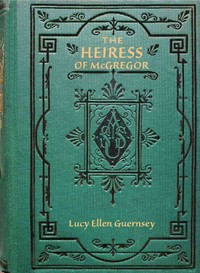
The heiress of McGregor : $b or, Living for self
Written by Lucy Ellen Guernsey
Chaptra reads alongside you — AI insights, chapter breakdowns and reader discussions for every book. Join free
About this book
Reading guide
Themes, characters and key ideas in The heiress of McGregor : $b or, Living for self, written by Chaptra AI.
- about 8 hours
- intermediate
- reflective
- moralistic
- thought-provoking
Lucy Ellen Guernsey's "The Heiress of McGregor; or, Living for Self" introduces Marion McGregor, a young woman grappling with vanity, discontent, and the constraints of her rural 19th-century life. The novel begins with Marion reflecting on a school punishment, revealing her aspirations for more advanced education and a life beyond her immediate circumstances, a stark contrast to her current family dynamics with her grandfather, Hector, and aunt, Barbara. Driven by an initial absorption in self-interest, the narrative promises to chart Marion's journey through personal disappointments and societal expectations. Through her character arc, the story explores themes of duty, ambition, and the inherent struggles of reconciling personal desires with the moral imperatives of the era. The novel also hints at a broader social critique, examining class distinctions and the challenges faced by young women in Victorian society.
“"To live for self is to build a gilded cage around the soul, beautiful on the outside, but suffocating within." (Illustrative quote)”
Key themes
- Living for Self vs. Duty/Altruism
- This is the central theme, explicitly stated in the subtitle. The novel explores the moral and personal consequences of prioritizing one's own desires, vanity, and ambition above the needs, responsibilities, and welfare of others. Marion's initial self-absorption sets the stage for a journey where she must learn the value of selflessness, community contribution, and the inherent satisfaction found in fulfilling one's duties and helping others.
- Education and Ambition
- The novel delves into the nature of education and the aspirations of young women in the 19th century. Marion's discontent with her schooling and her yearning for more advanced opportunities highlight the limitations placed on women's intellectual pursuits and the societal pressures to conform to domestic roles. The theme explores how ambition can be both a driving force for growth and a source of vanity if not properly tempered by wisdom and purpose.
- Social Class and Expectation
- Hinted at through Marion's status as an 'heiress' and her comparison to peers, the novel likely examines the privileges and burdens associated with social class in rural 19th-century society. It explores how one's position dictates expectations, opportunities, and responsibilities, and how an individual, particularly a young woman, navigates these pre-defined roles while pursuing personal desires.
Worth discussing
How does Marion's initial 'living for self' manifest, and what societal factors might contribute to her vanity and discontent?
Chapter-by-chapter breakdowns, character arcs and the full thematic analysis come with a free account.
Discussions
No one has started one yet
Questions this book opens up
No discussions yet
Be the first to start a discussion about this book!
Sign up to start the discussionReviews
No reviews yet
Be the first to review this book!