
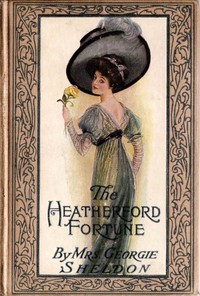
The Heatherford Fortune: a sequel to the Magic Cameo
Written by Georgie Sheldon
Chaptra reads alongside you — AI insights, chapter breakdowns and reader discussions for every book. Join free
About this book
Reading guide
Themes, characters and key ideas in The Heatherford Fortune: a sequel to the Magic Cameo, written by Chaptra AI.
- about 8 hours
- intermediate
- uplifting
- romantic
- hopeful
Mrs. Georgie Sheldon's "The Heatherford Fortune" is a compelling late 19th-century novel that continues the story from "The Magic Cameo," centering on the courageous Mollie Heatherford. Faced with the arduous task of supporting her ailing father, Mollie's life takes an unexpected turn after she heroically saves a child, Lucille. This act of bravery brings her into contact with Monsieur Jules Lamonti, Lucille's grateful grandfather, who offers her a position as his secretary. However, Lamonti's subsequent unexpected marriage proposal forces Mollie to navigate her personal feelings, societal expectations, and the daunting path toward securing her own and her father's future, ultimately exploring themes of resilience, duty, and the pursuit of self-determination.
“"True courage, my dear, is not merely the absence of fear, but the triumph over it for the sake of another."”
Key themes
- Heroism and Self-Sacrifice
- This theme is central to Mollie's character, introduced through her brave act of saving Lucille. It extends beyond physical courage to encompass her daily self-sacrifice in caring for her ailing father. The novel explores heroism not just in grand gestures, but in the quiet, persistent struggle for survival and dignity, highlighting the moral strength required to endure hardship for the sake of others.
- Independence and Agency
- Despite the constraints of her era and circumstances, Mollie strives for personal agency. Her decision-making, especially concerning Monsieur Lamonti's proposal, explores the tension between duty, gratitude, and her desire for a future she chooses rather than one dictated by necessity or obligation. The novel examines how a woman can seek self-determination within a society that often limited her choices to marriage or domestic service.
- Social Class and Financial Struggle
- The novel vividly portrays Mollie's challenging circumstances, highlighting the precariousness of life for those without inherited wealth in the late 19th century. It underscores how financial insecurity can dictate life choices and the constant pressure to find honorable means of support, particularly for women. The 'Heatherford Fortune' itself likely plays into this, representing a potential escape from this struggle.
Worth discussing
How does Mollie Heatherford embody the ideal of heroism in the late 19th century, and how might her heroism be viewed differently today?
Chapter-by-chapter breakdowns, character arcs and the full thematic analysis come with a free account.
Discussions
No one has started one yet
Questions this book opens up
No discussions yet
Be the first to start a discussion about this book!
Sign up to start the discussionReviews
No reviews yet
Be the first to review this book!