
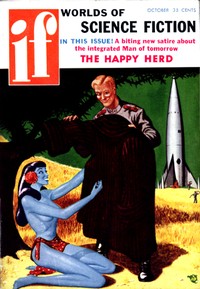
The Happy Herd
Written by Bryce Walton
Chaptra reads alongside you — AI insights, chapter breakdowns and reader discussions for every book. Join free
About this book
Reading guide
Themes, characters and key ideas in The Happy Herd, written by Chaptra AI.
- about 7 hours
- intermediate
- Dystopian
- Thought-provoking
- Psychological
Bryce Walton's mid-20th-century science fiction novel, "The Happy Herd," plunges Professor Larry Kane into a dystopian Earth society after a period on the Moon. He discovers a culture where individuality is suppressed, and collective happiness, enforced by a 'Group' and a preference-measuring machine, reigns supreme. Kane's profound desire for solitude clashes with the relentless social pressure to conform, particularly from figures like Phil and Laura. The narrative intricately explores the psychological toll of sacrificing personal freedom and autonomy for societal harmony. Ultimately, Kane faces a stark choice: succumb to the collective will or seek refuge in the isolation of space.
“My solitude was once my sanctuary; now it feels like a crime.”
Key themes
- Individuality vs. Conformity
- This is the central conflict of the novel, exploring the inherent tension between the human need for unique identity and societal pressures to fit in. The book portrays a society where conformity is not just encouraged but enforced, leading to the suppression of personal thought and emotion.
- Dystopian Society and Social Control
- The novel depicts a classic dystopian scenario where societal happiness is achieved through stringent control over individual thought and behavior. It examines the mechanisms by which a society can enforce a 'happy' facade, highlighting the insidious nature of control that masquerades as benevolence.
- Freedom and Autonomy
- The novel is a profound meditation on the importance of personal freedom and autonomy. It illustrates how the gradual erosion of individual rights—from the right to solitude to the right to independent thought—can lead to a society where people are effectively slaves to the collective will, even if that will is ostensibly benevolent.
Worth discussing
How does 'The Happy Herd' define happiness, and how does this definition clash with Professor Kane's understanding?
Chapter-by-chapter breakdowns, character arcs and the full thematic analysis come with a free account.
Discussions
No one has started one yet
Questions this book opens up
No discussions yet
Be the first to start a discussion about this book!
Sign up to start the discussionReviews
No reviews yet
Be the first to review this book!