
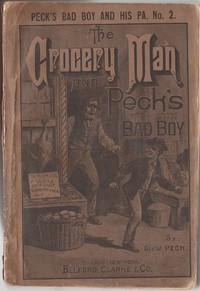
The Grocery Man And Peck's Bad Boy: Peck's Bad Boy and His Pa, No. 2 - 1883
Written by George W. (George Wilbur) Peck
Chaptra reads alongside you — AI insights, chapter breakdowns and reader discussions for every book. Join free
About this book
Reading guide
Themes, characters and key ideas in The Grocery Man And Peck's Bad Boy: Peck's Bad Boy and His Pa, No. 2 - 1883, written by Chaptra AI.
- about 8 hours
- intermediate
- humorous
- lighthearted
- mischievous
George W. Peck's "The Grocery Man And Peck's Bad Boy" is a classic late 19th-century American comedic novel that chronicles the continuous misadventures of the titular mischievous young boy and his long-suffering father, affectionately known as Pa. The narrative is episodic, focusing on the boy's clever and often elaborate pranks, which frequently target his oblivious father and other community figures, including the local grocery man. Through these humorous escapades, the book explores themes of childhood rebellion, the dynamics of family life, and the enduring nature of American wit and humor, all presented from the perspective of the spirited young protagonist. The novel captures a slice of rural or small-town American life, highlighting the playful conflict between generations and the boy's relentless quest for attention and independence.
“"Well, Pa, seems the old hound's taken to fancy colors, eh? Thought you always liked a bit of a spectacle on a Tuesday morning."”
Key themes
- Childhood Mischief and Innocence
- This is the central theme, exploring the nature of childhood through the lens of playful rebellion. The Bad Boy's pranks, while disruptive, are presented as extensions of youthful energy, curiosity, and a desire for engagement, rather than true malice. The theme questions where the line between innocent play and 'badness' lies, often suggesting that the boy's actions are simply a spirited way of interacting with his world.
- Family Dynamics and Parental Patience
- The theme explores the unique and often challenging relationship between a mischievous child and his parent. Pa's reactions, ranging from exasperation to reluctant amusement, highlight the complexities of parental love, discipline, and the limits of patience. It portrays a family unit that, despite constant chaos, maintains an underlying bond of affection and acceptance.
- American Wit and Humor
- The book serves as a prime example of late 19th-century American humor, characterized by its focus on practical jokes, situational comedy, and often a first-person, colloquial narrative voice. It reflects the popular taste for lighthearted entertainment that provided a humorous escape from daily life, often involving the subversion of authority figures or social norms in a harmless way.
Worth discussing
How does Peck's Bad Boy challenge or uphold the typical image of childhood in 19th-century America?
Chapter-by-chapter breakdowns, character arcs and the full thematic analysis come with a free account.
Discussions
No one has started one yet
Questions this book opens up
No discussions yet
Be the first to start a discussion about this book!
Sign up to start the discussionReviews
No reviews yet
Be the first to review this book!