
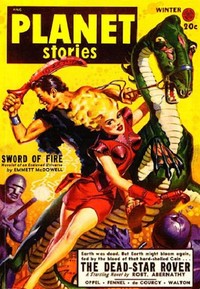
The Green Dream
Written by Bryce Walton
Chaptra reads alongside you — AI insights, chapter breakdowns and reader discussions for every book. Join free
About this book
Reading guide
Themes, characters and key ideas in The Green Dream, written by Chaptra AI.
- about 8 hours
- intermediate
- dystopian
- dark
- psychological
Bryce Walton's "The Green Dream" plunges readers into a dystopian Venusian future, following Owen Baarslag, a man exiled and addicted to the hallucinogenic drug Stith. Haunted by his past of torturing native Venusians, Owen plots a complex revenge against his twin brother, Albert, whom he blames for his downfall. His scheme involves exploiting Albert's groundbreaking suspended animation experiment to assume his identity and escape his miserable existence. However, Owen's sinister plans are complicated by supernatural nightmares orchestrated by a vengeful Venusian maid, Joha, ultimately leading to an ironic demise where he becomes a monstrous reflection of his own cruelty.
“The green dream was a lie, a siren's song sung by Stith, promising oblivion but delivering only deeper nightmares.”
Key themes
- Revenge and Retribution
- This theme is central to the narrative, driving Owen's entire plot against his brother Albert. It explores the corrosive nature of vengeance, showing how Owen's pursuit of it ultimately consumes and destroys him. The retribution from Joha and the Venusian environment further highlights the cyclical and inescapable nature of revenge.
- Consequences of Exploitation and Moral Depravity
- This theme forms the moral backbone of the novel, directly linking Owen's past actions of torturing and enslaving Venusian natives to his present torment and ultimate demise. It serves as a stark warning about the long-term repercussions of unchecked power, cruelty, and the dehumanization of others.
- Identity and Self-Deception
- The novel deeply explores the concept of identity through Owen's desperate desire to shed his own and assume his brother's. It questions whether one can truly escape their past or inherent nature simply by changing their external identity. Owen's self-deception about his own culpability is a key element of his tragic flaw.
Worth discussing
How does the Venusian environment contribute to Owen's psychological state and the novel's overall atmosphere?
Chapter-by-chapter breakdowns, character arcs and the full thematic analysis come with a free account.
Discussions
No one has started one yet
Questions this book opens up
No discussions yet
Be the first to start a discussion about this book!
Sign up to start the discussionReviews
No reviews yet
Be the first to review this book!