
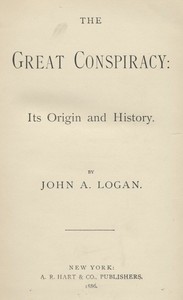
The Great Conspiracy, Volume 7
Written by John Alexander Logan
Chaptra reads alongside you — AI insights, chapter breakdowns and reader discussions for every book. Join free
About this book
Reading guide
Themes, characters and key ideas in The Great Conspiracy, Volume 7, written by Chaptra AI.
- about 12 hours
- advanced
- historical
- serious
- informative
John Alexander Logan's "The Great Conspiracy, Volume 7" offers a late 19th-century historical deep dive into the climactic final stages of the American Civil War. The volume meticulously chronicles critical military operations, including General Hood's aggressive Southern campaigns and General Sherman's strategic march, alongside the pivotal political developments of late 1864 and early 1865. It highlights President Lincoln's unwavering leadership amidst personal health struggles, his collaboration with General Grant, and the monumental push for the Thirteenth Amendment to abolish slavery. The narrative culminates in the surrender at Appomattox and the subsequent celebration of freedom, laying the groundwork for the monumental task of Reconstruction.
“The strategic movements of our forces, particularly those of Sherman and Hood, proved to be the anvil upon which the Confederacy's fate was hammered.”
Key themes
- The Preservation of the Union
- This theme is central, exploring the military and political efforts required to maintain the unity of the United States. Logan emphasizes the immense sacrifices and strategic brilliance necessary to prevent the nation's fragmentation, portraying the Union's victory as a triumph of national integrity.
- Abolition and Freedom
- The book places significant emphasis on the moral imperative and eventual achievement of abolishing slavery. The focus on the Thirteenth Amendment and the 'celebration of newfound freedoms' frames the war's conclusion not just as a military victory, but as a profound moral and social transformation.
- Leadership and Strategy in Wartime
- This theme examines the critical roles of key figures like President Lincoln and Generals Grant and Sherman in orchestrating the Union victory. Logan analyzes their military planning, political decisions, and ability to navigate immense pressure, showcasing the complexities of wartime leadership.
Worth discussing
How does Logan's perspective as a late 19th-century author and likely Union sympathizer shape his portrayal of events and figures?
Chapter-by-chapter breakdowns, character arcs and the full thematic analysis come with a free account.
Discussions
No one has started one yet
Questions this book opens up
No discussions yet
Be the first to start a discussion about this book!
Sign up to start the discussionReviews
No reviews yet
Be the first to review this book!