
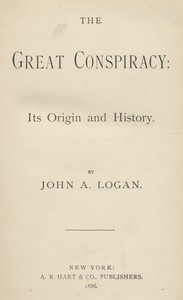
The Great Conspiracy, Volume 5
Written by John Alexander Logan
Chaptra reads alongside you — AI insights, chapter breakdowns and reader discussions for every book. Join free
About this book
Reading guide
Themes, characters and key ideas in The Great Conspiracy, Volume 5, written by Chaptra AI.
- about 8 hours
- advanced
- historical
- political
- tense
In "The Great Conspiracy, Volume 5," John Alexander Logan offers a late 19th-century historical examination of the American Civil War, specifically focusing on the pivotal period leading up to and immediately following Abraham Lincoln's Emancipation Proclamation. The volume meticulously details Lincoln's complex internal deliberations regarding the abolition of slavery, including his initial proposals for the colonization of freed African Americans, driven by his belief in inherent racial differences. Logan chronicles the political maelstrom surrounding emancipation, highlighting Lincoln's interactions with various stakeholders, including Horace Greeley, and the varied reactions to the Proclamation itself. The narrative illuminates the intense social and political struggles between free and slave states, positioning emancipation as a critical turning point in the nation's history and an ongoing challenge for its future.
“The physical difference between the white and black races, which I believe will forever forbid their living together on terms of social and political equality, necessitates a consideration of their future beyond mere emancipation.”
Key themes
- Emancipation and Freedom
- This theme explores the complex journey towards the abolition of slavery, not merely as a moral imperative but as a strategic necessity during wartime. It delves into the political, social, and personal ramifications of freedom for enslaved people and the nation as a whole, highlighting the profound societal transformation it entailed.
- Political Leadership and Decision-Making in Crisis
- The book meticulously details President Lincoln's internal deliberations and external political maneuvering during the most challenging period of American history. It examines the burdens of leadership, the necessity of strategic compromise, and the courage required to make epoch-defining decisions under immense pressure.
- Race and (In)Equality in 19th-Century America
- This theme explores the deeply entrenched racial prejudices and evolving understandings of race that characterized the era. It highlights how even figures like Lincoln, who championed freedom, held views on racial difference that informed policies like colonization, underscoring the pervasive nature of racism and the long road to true equality.
Worth discussing
How does Logan's late 19th-century perspective shape his interpretation of the Civil War and emancipation, and what are its strengths and limitations?
Chapter-by-chapter breakdowns, character arcs and the full thematic analysis come with a free account.
Discussions
No one has started one yet
Questions this book opens up
No discussions yet
Be the first to start a discussion about this book!
Sign up to start the discussionReviews
No reviews yet
Be the first to review this book!